Crime · Algeria · Algiers Court of Appeals (retrial); Supreme Court of Algeria (cassation ruling)
Mass Trial Begins in Algeria Over the Brutal Killing of Djamel Bensmail
Ninety-four people face retrial in Algeria on March 1, 2026, over deadly 2021 violence in the Kabylie region, after the Supreme Court overturned earlier convictions that included dozens of death sentences handed down in proceedings Amnesty International says were tainted by torture and politically motivated charges.
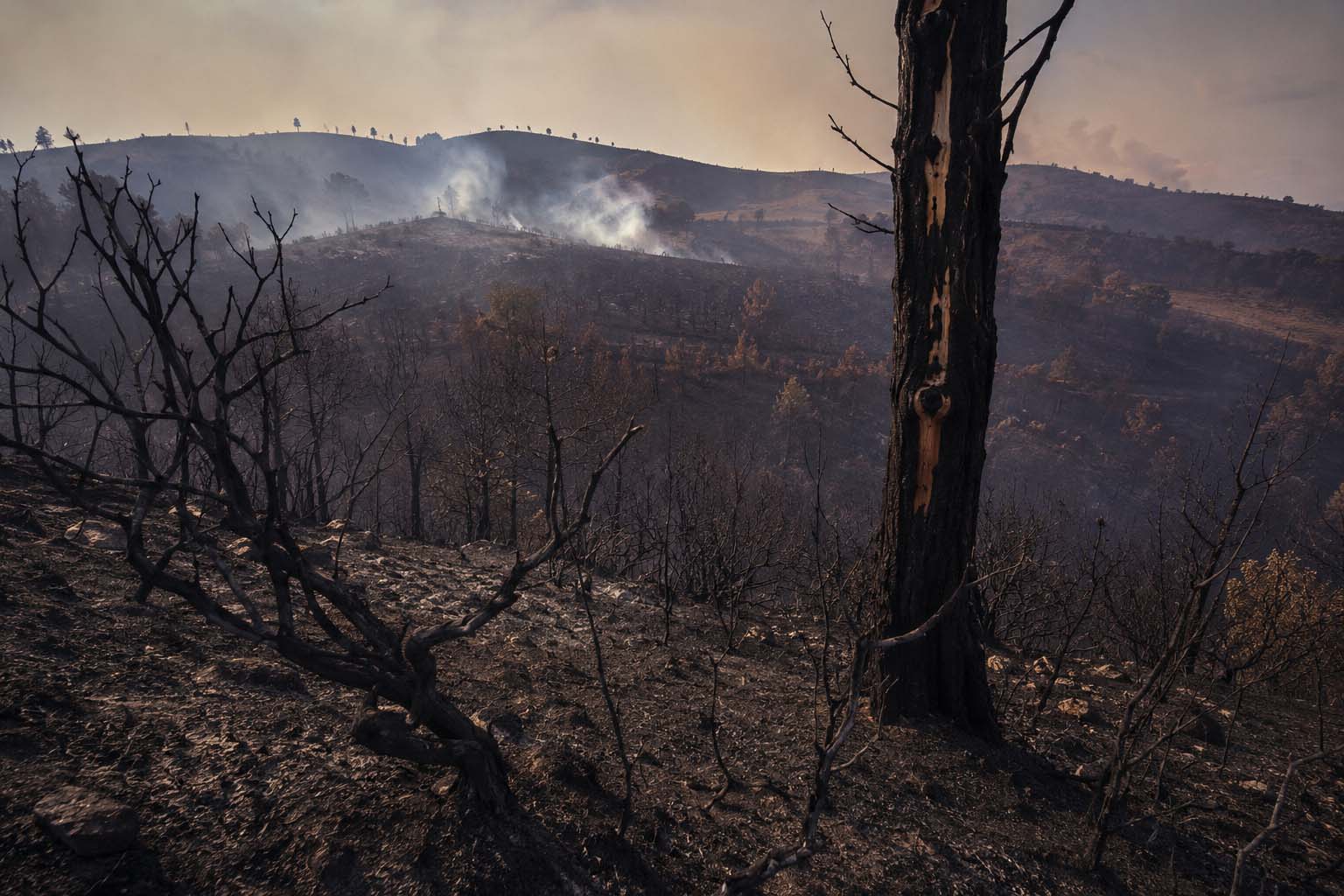
The burned forest in Kabylie.
In August 2021, a wave of violence tore through Algeria's Kabylie region — a mob lynching of activist Djamel Ben Smail, devastating wildfires, and widespread unrest that left at least 90 people dead. Algerian authorities arrested scores of people in the aftermath, and in November 2022, a criminal court in Algiers sentenced 49 of them to death, with seven more condemned in absentia, on charges ranging from terrorism and murder to arson. But the proceedings that produced those sentences were far from clean: at least five defendants told the court they had been subjected to electric shocks, attempted waterboarding, and threats of rape in detention to force confessions — allegations the judges declined to investigate, instead directing defendants to file their own complaints. Algerian television compounded the problem by broadcasting apparent 'confessions' from 12 of the accused before any verdict was reached. The Algiers Court of Appeals upheld 38 of the death sentences in October 2023, but Algeria's Supreme Court overturned the entire appeal ruling in November 2024 and ordered a fresh trial, now set for March 1, 2026. Amnesty International, which reviewed the original ruling and spoke with lawyers and family members, says at least 10 of the death-sentenced defendants appear to have been prosecuted purely on the basis of political affiliation with the Movement for the Self-determination of Kabylie — with four of them documented as having been outside Algeria when the violence occurred. With 52 defendants still behind bars, the human rights organization is calling on Algerian authorities to exclude torture-extracted statements, allow proper cross-examination of witnesses, and abandon the death penalty entirely in the retrial.
Key facts
- 94 individuals are scheduled for retrial on March 1, 2026, at the Algiers Court of Appeals.
- 56 people were convicted and sentenced to death in the original November 2022 trial, including 49 in court and 7 in absentia.
- Algeria's Supreme Court overturned the appeals court ruling on November 28, 2024, and ordered a retrial.
- At least five defendants alleged torture during detention, including electric shocks, attempted waterboarding, and threats of rape used to extract confessions.
- Judges in the original trial refused to investigate torture allegations and told defendants to file complaints themselves.
- Algerian television aired apparent confessions from 12 defendants before any verdict, violating presumption of innocence.
- At least 10 defendants sentenced to death appear to have been prosecuted solely for political affiliation with the MAK opposition group.
- Four of those 10 defendants were documented as being outside Algeria at the time of the August 2021 events.
- 52 defendants remain in detention ahead of the retrial.
- Algeria has not carried out any executions since 1993.
- The August 2021 violence included the lynching of activist Djamel Ben Smail and wildfires that killed at least 90 people.
The Man Who Came to Extinguish Fire
Reportage from an Algerian courtroom
The courtroom is large enough for ninety defendants and yet too small for the weight of this case.
They sit in long rows. Some gaze down at the floor. Others stare motionlessly ahead. Lawyers flip through case files, judges arrange documents, uniformed officers stand at the doors. This is no ordinary criminal trial. It is the legal reckoning of a day when an entire society lost control of itself.
Outside the courthouse, traffic roars through Algiers. Inside, it is about a few hours in August 2021.
About fire.
About fear.
About rumors.
And about a man who wanted to do the right thing at the wrong time and place.
Djamel Bensmail was an artist. A musician. An activist. One of those people who could not stand by when others needed help. When massive forest fires broke out in Kabylie and dozens of people died, he packed his belongings and drove more than three hundred kilometers to Larbaâ Nath Irathen. Not as a firefighter. Not on behalf of the state.
As a volunteer.
No one knew exactly why the fires were spreading so rapidly back then. Politicians spoke of arsonists. Warnings circulated on the radio. In social networks, rumors spread faster through the networks than flames through the forests. Unfamiliar faces suddenly became suspicious. Every unknown car could belong to a pyromaniac. Fear is a poor investigator.
When Bensmail arrived in town, the helper became a suspect within minutes.
He sought protection with the police himself.
It was a rational decision.
It did not save his life.
The crowd grew in front of the police station. Voices became screams. Screams became threats. Finally, the mob broke through the barriers. The officers lost control. The man who believed he was safe behind the walls of a state was dragged out.
What happened then shook all of Algeria.
The artist was beaten.
Kicked.
Humiliated.
His body was dragged through the streets.
Finally, he was burned.
Dozens of smartphones recorded what happened. Some perpetrators filmed themselves. Others posed next to the corpse. Even while smoke was still rising, the images began their second journey – no longer through the streets, but through the internet. Millions watched as a society observed itself experiencing moral collapse.
Almost as remarkable as the deed was his father's reaction.
While hatred against Kabylie was already igniting on social media, Noureddine Bensmail stepped in front of the cameras. He asked the Algerian people not to hold the entire region responsible for the murder. No call for retaliation. No revenge. Only the wish that the country would not break apart over this crime. Many observers are convinced that these words prevented further escalation.
The state responded with an unprecedented wave of investigations.
Over ninety people were arrested.
The charges ranged from premeditated murder to torture and arson to allegations related to terrorist associations. The investigators relied not least on hundreds of videos recorded by perpetrators and witnesses themselves. Mobile phones became evidence. Selfies became indictments.
In November 2022, the court handed down harsh sentences.
Dozens of death sentences.
Further lengthy prison sentences.
Acquittals for other defendants.
But from the outset, the proceedings were overshadowed.
Human rights organizations criticized serious procedural violations. Several defendants claimed their confessions were obtained under torture. Defense lawyers were not allowed to fully cross-examine police witnesses. State television broadcast recordings of alleged confessions shortly after arrests – long before a court had decided on guilt or innocence. For legal experts, this is an attack on the presumption of innocence.
The Supreme Court finally overturned the appellate verdict.
Not because the murder did not happen.
Not because there are doubts about the brutality of the crime.
But because even the most heinous defendant is entitled to a fair trial. This is precisely what the appellate court is now hearing again – with 94 defendants on the bench.
In the courtroom, the discussion has long been about more than Djamel Bensmail.
It is about a fundamental question of every rule of law:
Can a court achieve justice when an entire nation has already rendered its verdict?
Before the judges sit people whose images have forever preceded them.
Behind them sits the family of a man who will never come home again.
Between both sides lie thousands of pages of files.
And over everything hangs the same sentence one hears repeatedly in Algeria since that August:
He came to extinguish fire.
And became himself the victim of a fire that did not begin in the forest, but in the minds of people.
In-depth analysis
In August 2021, during a devastating wildfire crisis in Algeria that killed at least 90 people, a 38-year-old artist, musician, and civic activist named Djamel Bensmail voluntarily drove approximately 320 kilometres from his hometown of Miliana to the Kabylie region to help fight the fires. He had even posted on social media before leaving, stating his intention to help. Upon arriving in Larbaâ Nath Irathen, an angry crowd mistook him for an arsonist because he was a stranger to the area. Seeking protection, Bensmail voluntarily entered the local police station and explained to officers that he had come only to help. However, a growing mob stormed the police station, overpowered officers, and dragged Bensmail outside. He was beaten, stabbed multiple times, burned alive, and his body was mutilated. Some perpetrators recorded the attack and posted videos and selfies online, causing nationwide shock and outrage. The case gained an additional political dimension when authorities alleged that some suspects had ties to the MAK, a banned Kabyle independence movement — a claim that remains disputed. Bensmail's father, rather than calling for revenge, publicly urged people not to blame the entire Kabylie region and to refrain from retaliation, a gesture widely credited with helping prevent further ethnic escalation between Arab and Kabyle communities. Over 90 suspects were arrested. In the first trial in 2022, 49 defendants were sentenced to death (in practice equivalent to life imprisonment, as Algeria has carried out no executions since 1993), with others receiving prison sentences of two to ten years. On appeal in 2023, 38 death sentences were upheld, 27 defendants were acquitted, and others received sentences of three to twenty years. Algeria's Supreme Court subsequently overturned the appeal judgment, citing serious procedural concerns including allegations of confessions extracted under torture, denial of the right to cross-examine police witnesses, excessive reliance on written statements, and televised 'confessions' broadcast before any verdict was reached. In spring 2026, a new mass trial of 94 defendants commenced before the Court of Appeal in Algiers. Amnesty International has called for full adherence to fair trial standards, exclusion of any evidence possibly obtained under torture, and no imposition of the death penalty.
Timeline
The sequence of events in this case, from what happened to the court's final decision, in the order the court itself laid them out.
August 2021
Act
Devastating wildfires sweep Algeria, killing at least 90 people. Government officials claim many fires were deliberately set, causing widespread panic.
August 2021
Act
Djamel Bensmail posts on social media announcing his intention to help, then drives approximately 320 km from Miliana to Larbaâ Nath Irathen, Kabylie, to assist with firefighting efforts.
August 2021
Act
Upon arrival, an angry crowd mistakes Bensmail for an arsonist due to him being a stranger. He seeks refuge at the local police station. A mob storms the station, overpowers police, drags Bensmail out, beats, stabs, and burns him alive. His body is mutilated. Videos and selfies are taken and shared online.
August–late 2021
Investigation
Police arrest over 90 suspects. Prosecutors bring charges including premeditated murder, torture, arson, forming a terrorist association, and attacking state institutions. Some suspects are alleged to have links to the banned MAK independence movement.
2022
Trial
First trial concludes. Court sentences 49 defendants to death and others to prison terms of two to ten years. Several persons are convicted in absentia.
2023
Appeal
Appeal court modifies verdicts: 38 death sentences upheld (effectively life imprisonment given Algeria's moratorium on executions since 1993), 27 defendants acquitted, others sentenced to three to twenty years imprisonment.
Date unknown
Supreme Court Review
Algeria's Supreme Court annuls the appeal judgment, citing allegations of torture-extracted confessions, denial of right to cross-examine police witnesses, excessive use of written statements, and televised 'confessions' broadcast before any verdict.
Spring 2026
Retrial
New mass trial of 94 defendants begins before the Court of Appeal in Algiers. Amnesty International calls for fair trial standards, exclusion of evidence possibly obtained under torture, and no death penalty.
Evidence strength
How much weight each piece of evidence carried in the court's own reasoning -- a longer, darker bar means the court leaned on it more heavily in reaching its decision. This reflects the court's stated reasoning, not an independent judgment of the case.
Videos and selfies taken by perpetrators, shared online
95/100Police officer testimony from the scene
70/100Defendant confessions (contested as possibly coerced)
45/100Forensic/post-mortem findings
75/100Bensmail's pre-departure social media post establishing intent
50/100Written statements (criticized by Supreme Court)
35/100Alleged MAK affiliation evidence
25/100Involved persons
The people named in the judgment and the role each one played -- for example the defendant, a witness, or an expert who testified.
Djamel Bensmail
Victim · Artist, musician, and Hirak civic movement activist
Father of Djamel Bensmail (name not stated in judgment)
Victim's family member · Bereaved father and public moral voice
94 defendants (names not individually stated in judgment)
Accused · Members of the mob; some alleged by authorities to have links to the banned MAK movement
Amnesty International (organisation, not a person)
Human rights observer · International NGO monitoring fair trial compliance
Why the court decided this way
The court's own stated reasons for its ruling, listed in the order the court gave them -- not a ranking of legal importance, just the sequence the judgment presents them in.
- Video and photographic evidence documenting the attack, disseminated on the internet by perpetrators themselves, provided direct proof of the crime and identification of participants
- Eyewitness and police testimony placing defendants at the scene of the lynching at the police station in Larbaâ Nath Irathen
- Charges of premeditated murder, torture, and arson supported by forensic findings showing Bensmail was beaten, stabbed, burned alive, and mutilated
- Alleged confessions of suspects, though the Supreme Court later found these may have been extracted under torture, rendering their evidentiary value contested
- Alleged organizational links of some defendants to the banned MAK independence movement, supporting additional charges of forming a terrorist association and attacking state institutions
- The Supreme Court overturned the appeal judgment due to procedural violations: coerced confessions, inability of defense to cross-examine police witnesses, excessive reliance on written statements, and pre-verdict televised confessions
Frequently asked questions
Who was Djamel Bensmail?
Djamel Bensmail was a 38-year-old Algerian artist, musician, and civic activist from Miliana. He was killed by a mob in August 2021 while volunteering to help fight wildfires in the Kabylie region of Algeria.
Why was Djamel Bensmail killed?
According to the case summary, an angry crowd in Larbaâ Nath Irathen mistook Bensmail for an arsonist because he was a stranger to the area. He had in fact travelled approximately 320 kilometres from Miliana specifically to help fight the fires.
What happened when Bensmail sought protection at the police station?
Bensmail voluntarily entered the local police station and explained to officers that he had come only to help. However, a growing mob stormed the station, overpowered the officers, and dragged him outside, where he was beaten, stabbed multiple times, burned alive, and his body was mutilated.
Were the perpetrators recorded committing the crime?
Yes. According to the case summary, some perpetrators recorded the attack and posted videos and selfies online, which caused nationwide shock and outrage in Algeria.
What charges were brought against the defendants?
The charges included premeditated murder, torture, arson, forming a terrorist association, and attacking state institutions.
What were the outcomes of the first trial in 2022?
In the first trial in 2022, 49 defendants were sentenced to death and others received prison sentences ranging from two to ten years.
Does Algeria actually carry out executions?
According to the case summary, Algeria has carried out no executions since 1993. Therefore, in practice, the death sentences imposed are equivalent to life imprisonment.
What happened at the appeal in 2023?
On appeal in 2023, 38 of the death sentences were upheld, 27 defendants were acquitted, and others received sentences ranging from three to twenty years.
Why did Algeria's Supreme Court overturn the appeal judgment?
The Supreme Court overturned the appeal judgment citing serious procedural concerns, including allegations that confessions were extracted under torture, denial of the right to cross-examine police witnesses, excessive reliance on written statements, and televised 'confessions' broadcast before any verdict was reached.
What is happening in the case as of spring 2026?
As of spring 2026, a new mass retrial of 94 defendants has commenced before the Court of Appeal in Algiers.
What role did the MAK play in this case?
Authorities alleged that some suspects had ties to the MAK, a banned Kabyle independence movement. The case summary notes this claim remains disputed. The alleged connection gave the case an additional political dimension.
What was the reaction of Bensmail's father to his son's killing?
Rather than calling for revenge, Bensmail's father publicly urged people not to blame the entire Kabylie region and to refrain from retaliation. The case summary notes this was widely credited with helping prevent further ethnic escalation between Arab and Kabyle communities.
How many suspects were arrested in connection with the killing?
According to the case summary, over 90 suspects were arrested in connection with the case.
What has Amnesty International said about this case?
Amnesty International has called for full adherence to fair trial standards, the exclusion of any evidence possibly obtained under torture, and the non-imposition of the death penalty.
What specific fair trial violations has the Supreme Court identified?
The Supreme Court identified allegations of confessions extracted under torture, denial of the right to cross-examine police witnesses, excessive reliance on written statements, and televised 'confessions' broadcast before any verdict was reached.
Was Bensmail's intention to help the firefighting effort documented before his death?
Yes. According to the case summary, Bensmail had posted on social media before leaving Miliana, stating his intention to travel to the Kabylie region to help fight the fires.
What was the broader context of Bensmail's killing?
The killing occurred during a devastating wildfire crisis in Algeria in August 2021 that killed at least 90 people. The case also intersected with ethnic tensions between Arab and Kabyle communities, and the alleged involvement of a banned Kabyle separatist movement.
Why is the number of defendants different across the various trial stages?
The case summary indicates 49 death sentences in the first trial, 38 upheld and 27 acquitted on appeal, and 94 defendants in the retrial. The differing numbers reflect acquittals, procedural changes, and the Supreme Court's decision to order a full retrial after overturning the appeal judgment. The exact reasons for all numerical discrepancies are not fully explained in the case summary.
What is the significance of the televised confessions in this case?
The broadcasting of confessions on television before any verdict was reached was identified by the Supreme Court as one of the serious procedural concerns justifying the overturning of the appeal judgment. It raises fair trial concerns about prejudicing proceedings and the presumption of innocence.
Were the death sentences in this case legally distinct from a sentence of life imprisonment?
Formally, they are distinct sentences under Algerian law. However, in practice, the case summary notes that Algeria has not carried out any executions since 1993, making death sentences functionally equivalent to life imprisonment in terms of actual outcome, though this remains a contested human rights issue given Amnesty International's calls for the death penalty not to be imposed.
What courts have been involved in the Bensmail case?
Based on the case summary, the case has been heard by a first-instance trial court in 2022, an appeal court in 2023, Algeria's Supreme Court which overturned the appeal judgment, and the Court of Appeal in Algiers where the retrial commenced in spring 2026.
Is this case considered politically sensitive in Algeria?
Yes. The case summary describes it as having an additional political dimension due to authorities' allegations that some suspects had ties to the MAK, a banned Kabyle independence movement. The case also intersects with Arab-Kabyle communal tensions, though the political allegations remain disputed.
Why it matters
The case raises urgent questions about Algeria's use of broad terrorism statutes to prosecute political dissidents and its compliance with international fair trial standards, particularly regarding the admissibility of torture-extracted confessions and the right to cross-examine witnesses. A retrial resulting in death sentences based on the same tainted evidence would, under international law, render those punishments arbitrary. The case also signals a broader pattern of Algerian authorities using Article 87 bis of the Penal Code to target activists, journalists, and opposition-linked individuals since 2021.
Sources
Verdict in Appeal Proceedings (94 Defendants)
Comparison First Instance – Appeal
Changes First Instance → Appeal Proceedings
Share of Death Sentences in Appeal Proceedings
Procedural Outcomes
Final Reflections
Courts render verdicts. They can name guilt, impose sentences, and close files. What they cannot do is turn back the hour in which reason yielded to fear and a person ceased to be a person for another.
The case of Djamel Bensmail is therefore not merely about a murder. It tells of the fragility of a society when mistrust grows faster than certainty and rumors become louder than facts. The flames that swept across the forests back then left scorched earth. But the flames of fear left something invisible: the moment when a crowd believed it had the right to judge without evidence.
Perhaps that is the true tragedy. Not that an individual became a victim, but that many individuals temporarily stopped thinking as individuals. Neighbors became a crowd, voices became a chorus, responsibility became anonymity. Each bore only a small part of the guilt – and for precisely this reason, it became so enormous in the end.
The judges will decide on prison sentences. History will judge something else. It will ask why a man who came to protect the homes of strangers from fire found no shelter for himself. And it will remember that the father of the victim, in the midst of all his pain, did not call for retaliation, but for reason. Perhaps that was the greatest deed of this entire case.
For in the end, the greatness of a rule of law is measured not by how harshly it punishes, but by whether it remains just even when the crime seems to defy all measure. That is precisely where the most difficult work of a court begins – and perhaps the most important.