健康 · 白俄罗斯 · Minsk District Court (Суд Минского района)
Maximum Sentence After Fatal Crash Near Minsk Kills Family of Four
A Belarusian court sentenced a 26-year-old man to the maximum 10 years in prison after he drunkenly drove at nearly double the speed limit and killed a Russian mother, grandmother, and two young girls who were heading home from a holiday. The case drew widespread attention due to the utter disregard for safety revealed at every stage of that night.
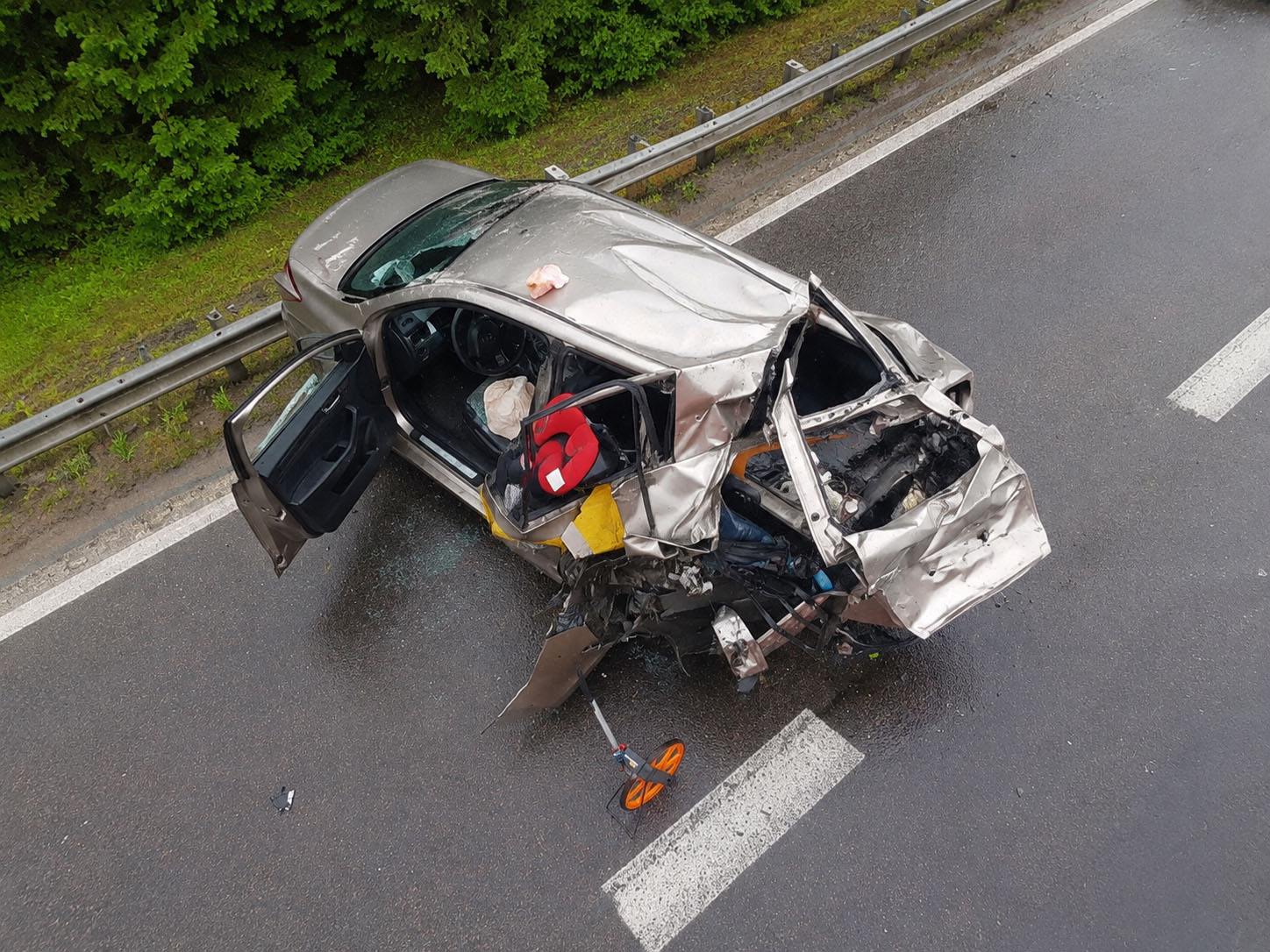
Just before 5 a.m. on June 28, a 43-year-old woman, her 75-year-old mother, and her daughters aged 7 and 13 were riding in a Skoda taxi toward Minsk National Airport, bound for their home city of Berezniki in Russia's Perm region after a tourist trip to Belarus. They never made it. A leased Mercedes, traveling at 182 km/h on a road where the limit was 90 km/h, slammed into the back of their taxi at full speed on the M2 highway near the village of Korolev Stan. All four members of the family were killed at the scene; the 40-year-old taxi driver survived with moderate injuries. Behind the wheel was a 26-year-old man who had spent the evening drinking with a colleague and whose blood alcohol level would later be measured at 2.18 per mille — classified as acute intoxication. The crash was not an isolated lapse: investigators found that just two hours earlier he had sideswiped a neighbor's parked car in Minsk and fled; he had removed his license plates to evade speed cameras; he had handed the wheel to a passenger who held no driving license; and his car's tires were dangerously worn, with exposed cord on one. His record showed two prior license revocations, the most recent in 2019 for drunk driving. The Minsk District Court convicted him under Part 5 of Article 317 of the Criminal Code — drunk driving causing the deaths of four people and injury to a fifth — and imposed the statutory maximum: 10 years in a general-regime penal colony, plus an eight-year ban on any activity involving the operation of motor vehicles.
关键事实
- The defendant was driving at 182 km/h in a 90 km/h zone at the time of the crash.
- His blood alcohol level was 2.18 per mille, corresponding to acute intoxication.
- Four members of a Russian family — a mother, her mother, and two daughters aged 7 and 13 — were killed at the scene.
- The victims were Russian tourists from Berezniki, Perm region, heading to the airport to fly home.
- The taxi driver survived with moderate injuries.
- The defendant had removed the car's license plates beforehand to avoid speed camera detection.
- He had allowed a passenger without a driving license to operate the vehicle.
- Two hours before the fatal crash, he hit a neighbor's parked car in Minsk and fled the scene.
- His tires had serious defects, including exposed cord on one tire.
- He had previously been stripped of his driving license twice, in 2017 and 2019, the latter for drunk driving.
The Road After the Airport
There are trials in which the law speaks. And there are trials in which silence speaks first.
It lay over the courtroom that morning like a heavy coat. No one cleared their throat. No one shuffled through their papers unnecessarily. Even the clock on the wall seemed to perform its duty reluctantly. Four people were dead. That could neither be minimized by paragraphs nor enlarged by files.
The defendant entered, not like a monster and not like a hero. He was just a man. The court knows this kind of person well. They look alike: the same shoulders, the same hands, the same attempts to fix their gaze somewhere between floor and window. Only when the charges are read does their story begin to differ from that of all the others.
The prosecutor spoke with that quiet precision that requires no exaggeration. Alcohol. Excessive speed. A night in which each wrong decision gave birth to the next like dominoes that could no longer be stopped. One hundred eighty kilometers per hour on a road built for ninety. A brief moment. A metallic sound. Afterward, four fewer lives on this earth.
The victims were hardly mentioned. Courts rarely speak long about the dead. They have no voice anymore. Their names are called, their ages, their relations. Grandmother. Daughter. Two granddaughters. Four words are enough to close an entire family album.
The judge listened. His face revealed nothing. Judges have learned not to wear their compassion on their faces. If every trial left traces, they would look older than history itself after a few years.
The defense counsel searched for circumstances. He spoke of remorse. Of a confession. Of a man who would spend the rest of his life with a memory that no prison could shorten. This too was true. In court, two truths can stand side by side without canceling each other out.
Then came the moment everyone had been waiting for. The verdict was read. Ten years imprisonment.
Ten years.
A number that sounds large in a courtroom and suddenly becomes small outside the building. Ten years are much for someone who spends them behind walls. They are nothing for those whose time came to a permanent stop on a summer morning on a country road.
As the judge left the courtroom, life outside resumed its usual indifference. Cars drove past. People hurried to work. Somewhere a plane took off from Minsk airport and disappeared behind the clouds.
Perhaps a family sat inside looking forward to their vacation. Perhaps children argued in the back seats of a car about trivial things. Perhaps somewhere another driver believed speed was just a number on a speedometer.
The court had rendered its verdict.
But human recklessness is tried anew every single day.
深度分析
明斯克地区法院于2025年12月12日判决一名白俄罗斯明斯克居民犯有酒后驾驶导致致命交通事故罪。被告驾驶一辆梅赛德斯-奔驰汽车高速行驶且严重酒后,与一辆出租车发生碰撞,导致出租车撞上护栏。出租车内四名乘客全部遇难:一名祖母、她的女儿和两名孙女——所有受害人均为俄罗斯国籍,原本前往机场回国。法院查证多项从重情节。被告在事故前整夜饮酒,酒精用尽后开车买酒,事故前还将车交给无驾驶证的朋友驾驶,事先卸下车牌,驾驶途中持续分心,直到碰撞几乎无法避免时才注意到出租车。法院适用该刑事条款规定的最高刑罚:有期徒刑10年和48年驾驶禁令。判决书在发布时尚未生效,仍可上诉。本案因行为极其严重、受害人数众多、受害者身份脆弱(包含儿童的多代家庭)及多项既查实的从重情节而引发广泛关注。判决书中未披露被告及受害人的姓名。
时间线
本案的事件经过,从事发到法院最终裁决,按照法院自身陈述的顺序排列。
事故前夜(判决书中未明确具体日期)
行为——事前饮酒
被告整夜饮用酒精饮料。
具体日期不详
行为——购买追加酒精
由于酒精供应不足,被告驾车到商店购买更多酒精。
具体日期不详
行为——将车交无证驾驶人
被告将车辆控制权交给一名没有驾驶证的朋友。
具体日期不详
行为——卸除车牌
在致命行程开始前,被告卸下车辆的车牌。
具体日期不详
行为——致命碰撞
被告在严重酒后和持续分心状态下高速驾驶,与出租车发生碰撞。出租车被撞入护栏。车内四名乘客全部遇难——一名祖母、她的女儿和两名孙女,均为俄罗斯国籍,原本前往机场。
2025年12月12日
审判与判决
明斯克地区法院判决被告有罪,并适用最高刑罚:有期徒刑10年和48年驾驶禁令。
发布日期(判决书中未明确具体日期)
判后状态
判决书在发布时尚未生效,表示仍可上诉或复审。
证据强度
每项证据在法院裁决理由中所占的分量——柱状越长、颜色越深,表示法院在做出裁决时对该证据的依赖程度越高。这反映的是法院自身的裁决理由,而非对案件的独立评价。
高速驾驶时严重酒精中毒
95/100在驾驶前卸除车牌
85/100持续分心;直到碰撞无法避免时才注意到出租车
85/100四名受害人因碰撞直接遇难
95/100在饮酒夜间购买追加酒精
70/100将车交给无证朋友驾驶
65/100相关人员
判决书中提到的人物及其各自扮演的角色,例如被告、证人或专家。
判决书中未披露
被告 · 梅赛德斯-奔驰汽车驾驶人;明斯克居民
判决书中未披露
受害人1 · 祖母;俄罗斯国籍
判决书中未披露
受害人2 · 成年女性;俄罗斯国籍
判决书中未披露
受害人3 · 孙女;俄罗斯国籍
判决书中未披露
受害人4 · 孙女;俄罗斯国籍
判决书中未披露
第三人 · 被告的朋友;曾在某一时段无证驾驶该车辆
法院做出此判决的原因
法院对其裁决所陈述的理由,按判决书中出现的顺序列出——并非按法律重要性排序,仅是陈述顺序。
- 被告在严重酒后驾驶,导致致命碰撞,造成一个俄罗斯家庭四人遇难
- 法院查证多项从重情节:前夜整夜饮酒、购买追加酒精、将车交给无证朋友驾驶、卸除车牌、驾驶途中持续分心
- 法院适用该刑事条款规定的最高刑罚,反映犯罪情节极其严重
- 四名受害人(一名祖母、她的女儿和两名孙女)在被告车辆碰撞出租车时遇难,出租车撞入护栏
- 被告直到碰撞几乎无法避免时才注意到出租车,表明其严重缺乏注意力和车辆控制能力
常见问题
明斯克酒驾致四人死亡案的判决结果如何?
明斯克地区法院判决被告犯有酒后驾驶导致致命交通事故罪,造成四人遇难。判决书于2025年12月12日作出。
法院判处了什么刑罚?
法院适用法定最高刑:有期徒刑10年和48年驾驶禁令。
受害人是谁?
四名受害人是出租车内的乘客:一名祖母、她的女儿和两名孙女。所有受害人均为俄罗斯国籍,原本前往机场回国。判决书中未披露任何姓名。
判决是最终判决吗?
否。判决书在发布时尚未生效,仍可上诉。
被告驾驶的是什么车?
被告驾驶的是一辆梅赛德斯-奔驰汽车,事故时正在高速行驶。
碰撞是如何发生的?
根据法院查证,被告在酒后高速驾驶时与出租车发生碰撞。出租车被撞入护栏,车内四名乘客全部遇难。
法院查证了哪些从重情节?
法院查证的从重情节包括:被告在事故前整夜饮酒;酒精用尽后驾车购买更多;将车交给无驾驶证的朋友驾驶;在致命行程前卸除车牌;驾驶途中持续分心,直到碰撞几乎无法避免时才注意到出租车。
被告是否允许他人驾驶过该车?
是的。法院查证被告曾一度允许一名没有驾驶证的朋友驾驶该车辆。
为什么要卸除车牌?
判决书记载车牌在致命行程前被卸除,但具体原因未在审查的判决书中说明。
被告当时是否在超速行驶?
是的。法院查证被告在碰撞时正在高速驾驶。
被告为什么在致命行程前驾车到商店?
根据法院查证,被告在事故前饮酒整夜后酒精用尽,驾车到商店购买更多酒精。
10年是白俄罗斯该罪名的最高刑罚吗?
是的。判决书记载法院适用了该刑事条款规定的最高刑罚,即有期徒刑10年。
48年驾驶禁令在白俄罗斯法院是否典型?
判决书未提供关于驾驶禁令长度的比较数据。仅记载在实施此判决的同时适用了48年驾驶禁令。该禁令长度是否典型在审查的判决书中不明确。
受害人的国籍与本案是否相关?
判决书记载受害人为俄罗斯国籍。其国籍在法律上是否与控罪或量刑相关在审查的判决书中不明确。
受害人之间是否有亲属关系?
是的。法院查证四名受害人为一个祖母、她的女儿和两名孙女——属于同一多代家庭的成员。
判决书中是否披露了被告的姓名?
否。审查的判决书中未披露被告及受害人的任何姓名。
为什么本案引发了广泛关注?
根据案件简述,本案因以下原因引发公众关注:行为极其严重、受害人数众多、受害者身份脆弱(包含儿童的多代家庭)及法院查证的多项从重情节。
被告在碰撞前是否注意到了出租车?
法院查证被告在驾驶途中持续分心,直到碰撞几乎无法避免时才注意到出租车。
哪个法院审理了本案?
本案由明斯克地区法院审理,于2025年12月12日作出判决。
上诉后刑罚是否可能改变?
由于判决书在发布时尚未生效,仍可上诉,这意味着刑罚有可能在上诉时被改变。任何上诉的结果在审查的判决书中未见记载。
受害人在事故发生时是否在出行中?
是的。法院查证四名受害人当时正在前往机场回国的途中时发生碰撞。
被告是根据白俄罗斯刑法的哪一条款受控?
控罪描述为酒后驾驶导致致命交通事故,造成四人死亡且多项从重情节。白俄罗斯刑法的具体条款在审查的判决书中未明确指出。
为何重要
The case resulted in the maximum custodial sentence available under the applicable Belarusian statute, reflecting the courts' treatment of repeat, egregiously reckless drunk driving that causes multiple fatalities. It also highlights cross-border dimensions of road safety, as the victims were foreign nationals killed on a major transit route. The accumulation of aggravating conduct — pre-crash hit-and-run, plate removal, unlicensed co-driver, and prior drunk-driving convictions — made this a benchmark case for prosecutorial and judicial response to extreme traffic criminality.
信息来源
Speed vs. Speed Limit
Final Reflection
Courts judge guilt. Life judges consequences.
The judge pronounces a sentence measured in years. Ten years. But outside the courtroom, fate knows no sentencing guidelines. There is no appeal, no recourse against what has happened. Four people never return home. A family bears a void that no verdict can close. And a man will carry the day of his deed with him for as long as he lives.
We like to imagine life as a straight road. In truth, it is a network of intersections. At each one waits a decision – often small, often casual, sometimes barely conscious. Do I drive or do I stay? Do I have another drink or do I leave the keys behind? Do I accelerate or do I ease off the gas?
Most of these decisions vanish without a trace. But some divide a life into a before and an after.
Perhaps that is the true tragedy of this trial. The accident lasted only a few seconds. The consequences will outlast decades. For the families of the victims, life begins in which birthdays remain incomplete, family celebrations know an empty place at the table, and memories become more precious than any future that was taken from them. For the condemned man, a single moment ends the life he had lived until then. Behind prison walls time passes slowly, but even there it erases nothing.
A court can determine who is responsible. It can impose a sentence. It can restore legal peace. What it cannot do is turn back time.
Perhaps therein lies the quiet lesson that emanates from every such proceeding. Not every person will stand before a judge. But every person stands every day at small and large intersections of their life. Usually no one suspects which decision is trivial and which will change everything.
The path we choose eventually becomes our story. And some branches in the road, however inconspicuous they may seem in the moment, can never be left again.
The verdict of this court ends the trial.
But the story does not end with the judge's gavel. It lives on – in the memories of the bereaved, in the guilt of the condemned, and as a silent reminder that between an ordinary day and a lifelong tragedy, there sometimes lies only a single, wrong decision.