犯罪 · 阿尔及利亚 · Algiers Court of Appeals (retrial); Supreme Court of Algeria (cassation ruling)
Mass Trial Begins in Algeria Over the Brutal Killing of Djamel Bensmail
Ninety-four people face retrial in Algeria on March 1, 2026, over deadly 2021 violence in the Kabylie region, after the Supreme Court overturned earlier convictions that included dozens of death sentences handed down in proceedings Amnesty International says were tainted by torture and politically motivated charges.
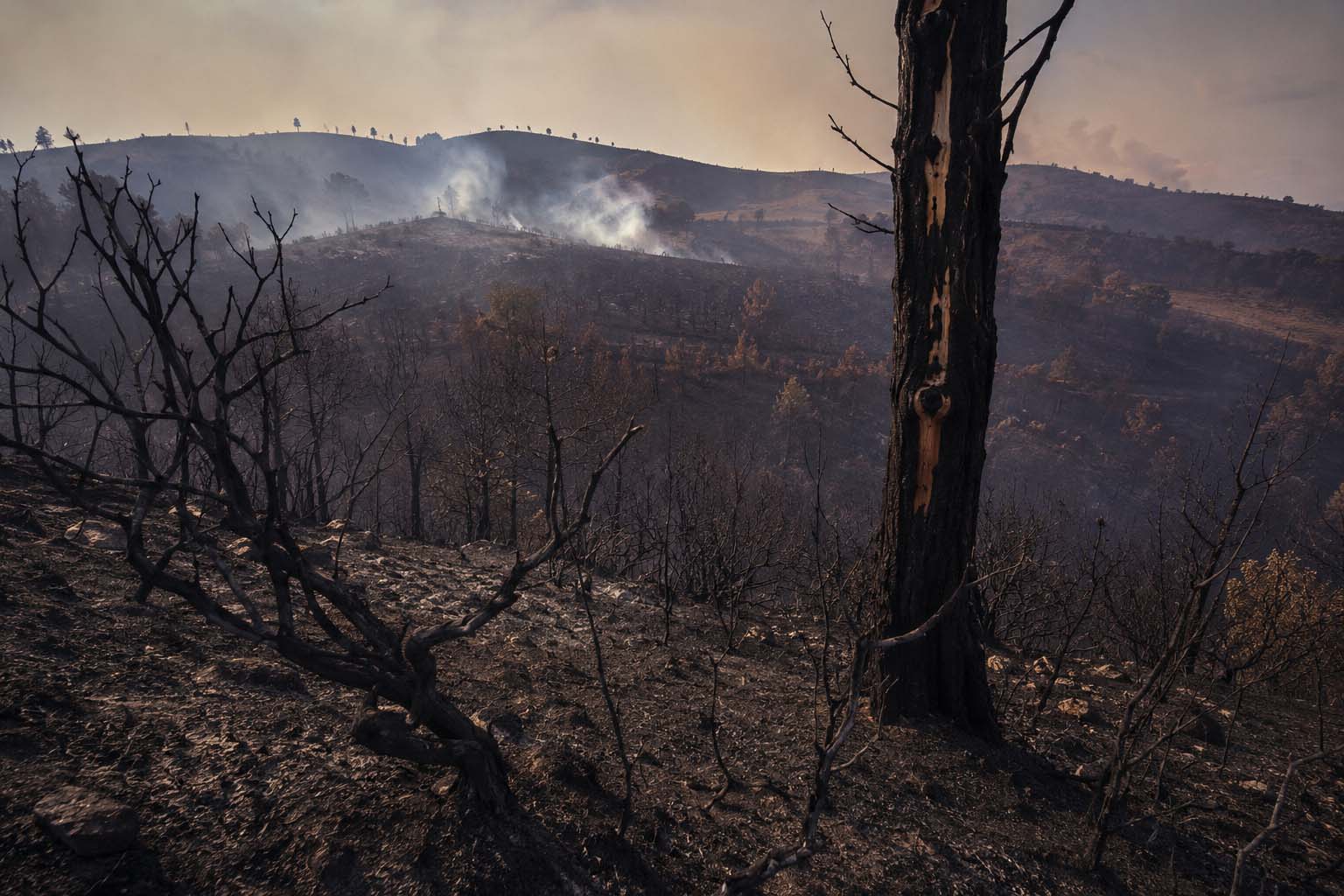
The burned forest in Kabylie.
In August 2021, a wave of violence tore through Algeria's Kabylie region — a mob lynching of activist Djamel Ben Smail, devastating wildfires, and widespread unrest that left at least 90 people dead. Algerian authorities arrested scores of people in the aftermath, and in November 2022, a criminal court in Algiers sentenced 49 of them to death, with seven more condemned in absentia, on charges ranging from terrorism and murder to arson. But the proceedings that produced those sentences were far from clean: at least five defendants told the court they had been subjected to electric shocks, attempted waterboarding, and threats of rape in detention to force confessions — allegations the judges declined to investigate, instead directing defendants to file their own complaints. Algerian television compounded the problem by broadcasting apparent 'confessions' from 12 of the accused before any verdict was reached. The Algiers Court of Appeals upheld 38 of the death sentences in October 2023, but Algeria's Supreme Court overturned the entire appeal ruling in November 2024 and ordered a fresh trial, now set for March 1, 2026. Amnesty International, which reviewed the original ruling and spoke with lawyers and family members, says at least 10 of the death-sentenced defendants appear to have been prosecuted purely on the basis of political affiliation with the Movement for the Self-determination of Kabylie — with four of them documented as having been outside Algeria when the violence occurred. With 52 defendants still behind bars, the human rights organization is calling on Algerian authorities to exclude torture-extracted statements, allow proper cross-examination of witnesses, and abandon the death penalty entirely in the retrial.
关键事实
- 94 individuals are scheduled for retrial on March 1, 2026, at the Algiers Court of Appeals.
- 56 people were convicted and sentenced to death in the original November 2022 trial, including 49 in court and 7 in absentia.
- Algeria's Supreme Court overturned the appeals court ruling on November 28, 2024, and ordered a retrial.
- At least five defendants alleged torture during detention, including electric shocks, attempted waterboarding, and threats of rape used to extract confessions.
- Judges in the original trial refused to investigate torture allegations and told defendants to file complaints themselves.
- Algerian television aired apparent confessions from 12 defendants before any verdict, violating presumption of innocence.
- At least 10 defendants sentenced to death appear to have been prosecuted solely for political affiliation with the MAK opposition group.
- Four of those 10 defendants were documented as being outside Algeria at the time of the August 2021 events.
- 52 defendants remain in detention ahead of the retrial.
- Algeria has not carried out any executions since 1993.
- The August 2021 violence included the lynching of activist Djamel Ben Smail and wildfires that killed at least 90 people.
The Man Who Came to Extinguish Fire
Reportage from an Algerian courtroom
The courtroom is large enough for ninety defendants and yet too small for the weight of this case.
They sit in long rows. Some gaze down at the floor. Others stare motionlessly ahead. Lawyers flip through case files, judges arrange documents, uniformed officers stand at the doors. This is no ordinary criminal trial. It is the legal reckoning of a day when an entire society lost control of itself.
Outside the courthouse, traffic roars through Algiers. Inside, it is about a few hours in August 2021.
About fire.
About fear.
About rumors.
And about a man who wanted to do the right thing at the wrong time and place.
Djamel Bensmail was an artist. A musician. An activist. One of those people who could not stand by when others needed help. When massive forest fires broke out in Kabylie and dozens of people died, he packed his belongings and drove more than three hundred kilometers to Larbaâ Nath Irathen. Not as a firefighter. Not on behalf of the state.
As a volunteer.
No one knew exactly why the fires were spreading so rapidly back then. Politicians spoke of arsonists. Warnings circulated on the radio. In social networks, rumors spread faster through the networks than flames through the forests. Unfamiliar faces suddenly became suspicious. Every unknown car could belong to a pyromaniac. Fear is a poor investigator.
When Bensmail arrived in town, the helper became a suspect within minutes.
He sought protection with the police himself.
It was a rational decision.
It did not save his life.
The crowd grew in front of the police station. Voices became screams. Screams became threats. Finally, the mob broke through the barriers. The officers lost control. The man who believed he was safe behind the walls of a state was dragged out.
What happened then shook all of Algeria.
The artist was beaten.
Kicked.
Humiliated.
His body was dragged through the streets.
Finally, he was burned.
Dozens of smartphones recorded what happened. Some perpetrators filmed themselves. Others posed next to the corpse. Even while smoke was still rising, the images began their second journey – no longer through the streets, but through the internet. Millions watched as a society observed itself experiencing moral collapse.
Almost as remarkable as the deed was his father's reaction.
While hatred against Kabylie was already igniting on social media, Noureddine Bensmail stepped in front of the cameras. He asked the Algerian people not to hold the entire region responsible for the murder. No call for retaliation. No revenge. Only the wish that the country would not break apart over this crime. Many observers are convinced that these words prevented further escalation.
The state responded with an unprecedented wave of investigations.
Over ninety people were arrested.
The charges ranged from premeditated murder to torture and arson to allegations related to terrorist associations. The investigators relied not least on hundreds of videos recorded by perpetrators and witnesses themselves. Mobile phones became evidence. Selfies became indictments.
In November 2022, the court handed down harsh sentences.
Dozens of death sentences.
Further lengthy prison sentences.
Acquittals for other defendants.
But from the outset, the proceedings were overshadowed.
Human rights organizations criticized serious procedural violations. Several defendants claimed their confessions were obtained under torture. Defense lawyers were not allowed to fully cross-examine police witnesses. State television broadcast recordings of alleged confessions shortly after arrests – long before a court had decided on guilt or innocence. For legal experts, this is an attack on the presumption of innocence.
The Supreme Court finally overturned the appellate verdict.
Not because the murder did not happen.
Not because there are doubts about the brutality of the crime.
But because even the most heinous defendant is entitled to a fair trial. This is precisely what the appellate court is now hearing again – with 94 defendants on the bench.
In the courtroom, the discussion has long been about more than Djamel Bensmail.
It is about a fundamental question of every rule of law:
Can a court achieve justice when an entire nation has already rendered its verdict?
Before the judges sit people whose images have forever preceded them.
Behind them sits the family of a man who will never come home again.
Between both sides lie thousands of pages of files.
And over everything hangs the same sentence one hears repeatedly in Algeria since that August:
He came to extinguish fire.
And became himself the victim of a fire that did not begin in the forest, but in the minds of people.
深度分析
2021年8月,在造成至少90人死亡的阿尔及利亚毁灭性野火危机期间,38岁的艺术家、音乐家和公民活动人士迪亚梅尔·本斯梅尔自愿从家乡米利亚纳驾车约320公里到卡比利亚地区帮助扑灭火灾。他甚至在出发前在社交媒体上发布了帮助的意图。抵达拉尔巴阿·纳特·伊拉森后,一群愤怒的群众因为他是陌生人而误认为他是纵火犯。为了寻求保护,本斯梅尔自愿进入当地警察局并向警察解释他只是来帮助的。然而,不断增长的暴民冲进警察局,制服了警察,并将本斯梅尔拖到外面。他遭到殴打、多次刺伤、被活活烧死,尸体被肢解。一些肇事者记录了这次袭击,并在网上发布了视频和自拍照,引起全国震惊和愤怒。当当局声称一些嫌疑人与被禁止的卡比利亚独立运动MAK有关联时,该案获得了额外的政治色彩——这一指控仍然存在争议。本斯梅尔的父亲没有呼吁复仇,而是公开呼吁人们不要指责整个卡比利亚地区,避免报复,这一举动被广泛认为有助于防止阿拉伯人和卡比利亚人社区之间的进一步民族冲突升级。超过90名嫌疑人被逮捕。在2022年的第一次审判中,49名被告被判处死刑(实际上相当于终身监禁,因为阿尔及利亚自1993年以来没有进行过任何处决),其他人获得两至十年的监禁刑期。在2023年的上诉中,38份死刑被维持,27名被告被宣告无罪,其他人获得三至二十年的刑期。阿尔及利亚最高法院随后推翻了上诉判决,理由是存在严重的程序问题,包括指控刑讯逼供、否认质证警察证人的权利、过度依赖书面陈述以及在任何判决前播放的电视'认罪'。2026年春季,对94名被告的新大规模审判在阿尔及尔上诉法院开始。国际特赦组织呼吁充分遵守公正审判标准,排除可能在刑讯逼供下获得的任何证据,以及不适用死刑。
时间线
本案的事件经过,从事发到法院最终裁决,按照法院自身陈述的顺序排列。
2021年8月
实施阶段
毁灭性野火席卷阿尔及利亚,造成至少90人死亡。政府官员声称许多火灾是故意纵火,引起广泛恐慌。
2021年8月
实施阶段
迪亚梅尔·本斯梅尔在社交媒体上发布声明宣布帮助的意图,然后从米利亚纳驾车约320公里到卡比利亚的拉尔巴阿·纳特·伊拉森,协助扑灭火灾工作。
2021年8月
实施阶段
抵达后,一群愤怒的群众因为本斯梅尔是陌生人而误认为他是纵火犯。他在当地警察局寻求庇护。一个暴民群体冲进警察局,制服警察,将本斯梅尔拖出,对他进行殴打、刺伤并活活烧死。尸体被肢解。视频和自拍照被拍摄并在网上分享。
2021年8月至年底
调查阶段
警方逮捕了超过90名嫌疑人。检察机关控告的罪名包括蓄意谋杀、刑讯逼供、纵火、组织恐怖组织和袭击国家机构。一些嫌疑人被指控与被禁止的MAK独立运动有联系。
2022年
审判
第一次审判结束。法院判处49名被告死刑,其他被告获得两至十年的监禁刑期。多人被缺席判罪。
2023年
上诉
上诉法院修改了判决:38份死刑维持(鉴于阿尔及利亚自1993年以来暂停执行死刑,实际上相当于终身监禁),27名被告被宣告无罪,其他被告被判处三至二十年监禁。
日期未明确
最高法院审查
阿尔及利亚最高法院撤销上诉判决,理由是刑讯逼供提取的认罪、否认质证警察证人的权利、过度使用书面陈述,以及在判决前播放的电视'认罪'。
2026年春季
重审
对94名被告的新大规模审判在阿尔及尔上诉法院开始进行。国际特赦组织呼吁遵守公正审判标准,排除可能在刑讯逼供下获得的证据,以及不适用死刑。
证据强度
每项证据在法院裁决理由中所占的分量——柱状越长、颜色越深,表示法院在做出裁决时对该证据的依赖程度越高。这反映的是法院自身的裁决理由,而非对案件的独立评价。
肇事者拍摄的视频和自拍照,在网上分享
95/100现场警察官员证词
70/100被告供述(作为可能强迫获得的证据存在争议)
45/100法医/尸检发现
75/100本斯梅尔出发前的社交媒体帖子,确立了意图
50/100书面陈述(因最高法院批评而有争议)
35/100alleged MAK关联证据
25/100相关人员
判决书中提到的人物及其各自扮演的角色,例如被告、证人或专家。
Djamel Bensmail
受害者 · 艺术家、音乐家和希拉克公民运动活动人士
Djamel Bensmail之父(名字在判决书中未说明)
受害者家庭成员 · 丧子之父和公共道德声音
94名被告(名字在判决书中未单独说明)
被告 · 暴民成员;当局声称其中一些人与被禁止的MAK运动有联系
国际特赦组织(组织,非个人)
人权观察者 · 国际非政府组织监督公正审判合规性
法院做出此判决的原因
法院对其裁决所陈述的理由,按判决书中出现的顺序列出——并非按法律重要性排序,仅是陈述顺序。
- 肇事者自己拍摄并在互联网上传播的视频和照片证据直接证明了犯罪并确认了参与者的身份
- 目击者和警方证词证实被告在拉尔巴阿·纳特·伊拉森警察局私刑发生时的现场
- 法医鉴定支持谋杀、刑讯逼供和纵火指控,显示本斯梅尔遭到殴打、刺伤、活活烧死和肢解
- 嫌疑人的认罪陈述(虽然最高法院后来认定这些陈述可能系刑讯逼供获得,因此其证据价值存在争议)
- 部分被告与被禁止的MAK独立运动的alleged组织联系,支持组织恐怖组织和袭击国家机构的额外指控
- 最高法院推翻上诉判决基于程序违规:强迫认罪、辩护方无法质证警察证人、过度依赖书面陈述以及判决前的电视认罪播放
常见问题
Djamel Bensmail是谁?
Djamel Bensmail是一位38岁的阿尔及利亚艺术家、音乐家和公民活动人士,来自米利亚纳。他在2021年8月自愿前往阿尔及利亚卡比利亚地区帮助扑灭野火时遭一群暴民杀害。
为什么Djamel Bensmail被杀害?
根据案件摘要,拉尔巴阿·纳特·伊拉森的一群愤怒群众因为本斯梅尔是陌生人而误认为他是纵火犯。实际上,他从米利亚纳驾车约320公里专程来帮助扑灭火灾。
当Bensmail在警察局寻求保护时发生了什么?
本斯梅尔自愿进入当地警察局,向警察解释他只是来帮助的。然而,不断增长的暴民冲进警察局,制服了警察,并将他拖到外面,那里他遭到殴打、多次刺伤、被活活烧死,尸体被肢解。
犯罪行为被记录下来了吗?
是的。根据案件摘要,一些肇事者记录了这次袭击,并在网上发布了视频和自拍照,在阿尔及利亚引起了全国性的震惊和愤怒。
对被告提出了什么指控?
指控包括蓄意谋杀、刑讯逼供、纵火、组织恐怖组织和袭击国家机构。
2022年第一次审判的结果是什么?
在2022年的第一次审判中,49名被告被判处死刑,其他被告获得两至十年的监禁刑期。
阿尔及利亚是否真的执行死刑?
根据案件摘要,阿尔及利亚自1993年以来没有执行过死刑。因此,实际上,死刑判决相当于终身监禁。
2023年上诉的结果是什么?
在2023年的上诉中,38份死刑被维持,27名被告被宣告无罪,其他被告获得三至二十年的刑期。
为什么阿尔及利亚最高法院推翻了上诉判决?
最高法院以存在严重程序问题为由推翻了上诉判决,包括刑讯逼供指控、否认质证警察证人的权利、过度依赖书面陈述,以及在判决前播放的电视'认罪'。
截至2026年春季,案件的进展如何?
截至2026年春季,对94名被告的新大规模重审在阿尔及尔上诉法院开始进行。
MAK在该案中扮演了什么角色?
当局声称一些嫌疑人与被禁止的卡比利亚独立运动MAK有联系。案件摘要指出这一指控仍然存在争议。alleged联系给了该案额外的政治色彩。
Bensmail的父亲对他的死亡作出了什么反应?
Bensmail的父亲没有呼吁复仇,而是公开呼吁人们不要指责整个卡比利亚地区,避免报复。案件摘要指出这被普遍认为有助于防止阿拉伯人和卡比利亚人社区之间的进一步民族冲突升级。
有多少嫌疑人因该杀害事件被逮捕?
根据案件摘要,超过90名嫌疑人因该案被逮捕。
国际特赦组织对该案说了什么?
国际特赦组织呼吁充分遵守公正审判标准,排除可能在刑讯逼供下获得的任何证据,以及不适用死刑。
最高法院具体确定了哪些公正审判违规?
最高法院确定了刑讯逼供指控、否认质证警察证人的权利、过度依赖书面陈述,以及在任何判决前播放的电视'认罪'。
在他去世前,Bensmail帮助消防工作的意图是否被记录下来?
是的。根据案件摘要,Bensmail在离开米利亚纳前在社交媒体上发布了声明,陈述了他前往卡比利亚地区帮助扑灭火灾的意图。
Bensmail死亡的更广泛背景是什么?
杀害事件发生在2021年8月阿尔及利亚毁灭性野火危机期间,造成至少90人死亡。该案还与阿拉伯人和卡比利亚人社区之间的民族紧张关系相关,以及被禁止的卡比利亚分离主义运动的alleged参与。
为什么各个审判阶段的被告人数不同?
案件摘要显示第一次审判有49份死刑判决,上诉中38份被维持,27人被宣告无罪,重审中有94名被告。不同的数字反映了无罪释放、程序变更和最高法院推翻上诉判决后下令全面重审的决定。案件摘要中没有充分解释所有数字差异的确切原因。
电视认罪在该案中的意义是什么?
在任何判决前播放认罪被最高法院确定为推翻上诉判决的严重程序问题之一。这引发了关于有损诉讼程序和推定无罪原则的公正审判关切。
该案中的死刑判决在法律上与终身监禁判决有区别吗?
根据阿尔及利亚法律,它们在形式上是不同的判决。然而,实际上,案件摘要指出阿尔及利亚自1993年以来没有执行过死刑,使死刑判决在实际结果方面实际上等同于终身监禁,尽管鉴于国际特赦组织呼吁不适用死刑,这仍然是一个存在争议的人权问题。
Bensmail案涉及了哪些法院?
根据案件摘要,该案由2022年的初审法院、2023年的上诉法院、推翻上诉判决的阿尔及利亚最高法院以及2026年春季开始重审的阿尔及尔上诉法院处理。
该案在阿尔及利亚被认为具有政治敏感性吗?
是的。案件摘要将其描述为因当局指控一些嫌疑人与被禁止的卡比利亚独立运动MAK有联系而具有额外政治色彩。该案还与阿拉伯人-卡比利亚人社区紧张关系相关,尽管政治指控仍然存在争议。
为何重要
The case raises urgent questions about Algeria's use of broad terrorism statutes to prosecute political dissidents and its compliance with international fair trial standards, particularly regarding the admissibility of torture-extracted confessions and the right to cross-examine witnesses. A retrial resulting in death sentences based on the same tainted evidence would, under international law, render those punishments arbitrary. The case also signals a broader pattern of Algerian authorities using Article 87 bis of the Penal Code to target activists, journalists, and opposition-linked individuals since 2021.
信息来源
Verdict in Appeal Proceedings (94 Defendants)
Comparison First Instance – Appeal
Changes First Instance → Appeal Proceedings
Share of Death Sentences in Appeal Proceedings
Procedural Outcomes
Final Reflections
Courts render verdicts. They can name guilt, impose sentences, and close files. What they cannot do is turn back the hour in which reason yielded to fear and a person ceased to be a person for another.
The case of Djamel Bensmail is therefore not merely about a murder. It tells of the fragility of a society when mistrust grows faster than certainty and rumors become louder than facts. The flames that swept across the forests back then left scorched earth. But the flames of fear left something invisible: the moment when a crowd believed it had the right to judge without evidence.
Perhaps that is the true tragedy. Not that an individual became a victim, but that many individuals temporarily stopped thinking as individuals. Neighbors became a crowd, voices became a chorus, responsibility became anonymity. Each bore only a small part of the guilt – and for precisely this reason, it became so enormous in the end.
The judges will decide on prison sentences. History will judge something else. It will ask why a man who came to protect the homes of strangers from fire found no shelter for himself. And it will remember that the father of the victim, in the midst of all his pain, did not call for retaliation, but for reason. Perhaps that was the greatest deed of this entire case.
For in the end, the greatness of a rule of law is measured not by how harshly it punishes, but by whether it remains just even when the crime seems to defy all measure. That is precisely where the most difficult work of a court begins – and perhaps the most important.