Money · Andorra · La Batllia (Andorran first-instance court)
The Banking Palace Fell — And With It a Myth: Andorra's Trial of the Century Over the BPA
After nine years and 195 days of oral hearings, an Andorran court has handed down a sweeping 6,180-page judgment convicting 18 former executives of Banca Privada d'Andorra for laundering €70 million linked to a Chinese business group. The ruling closes the first criminal chapter of a scandal that shook a small nation's entire banking sector.
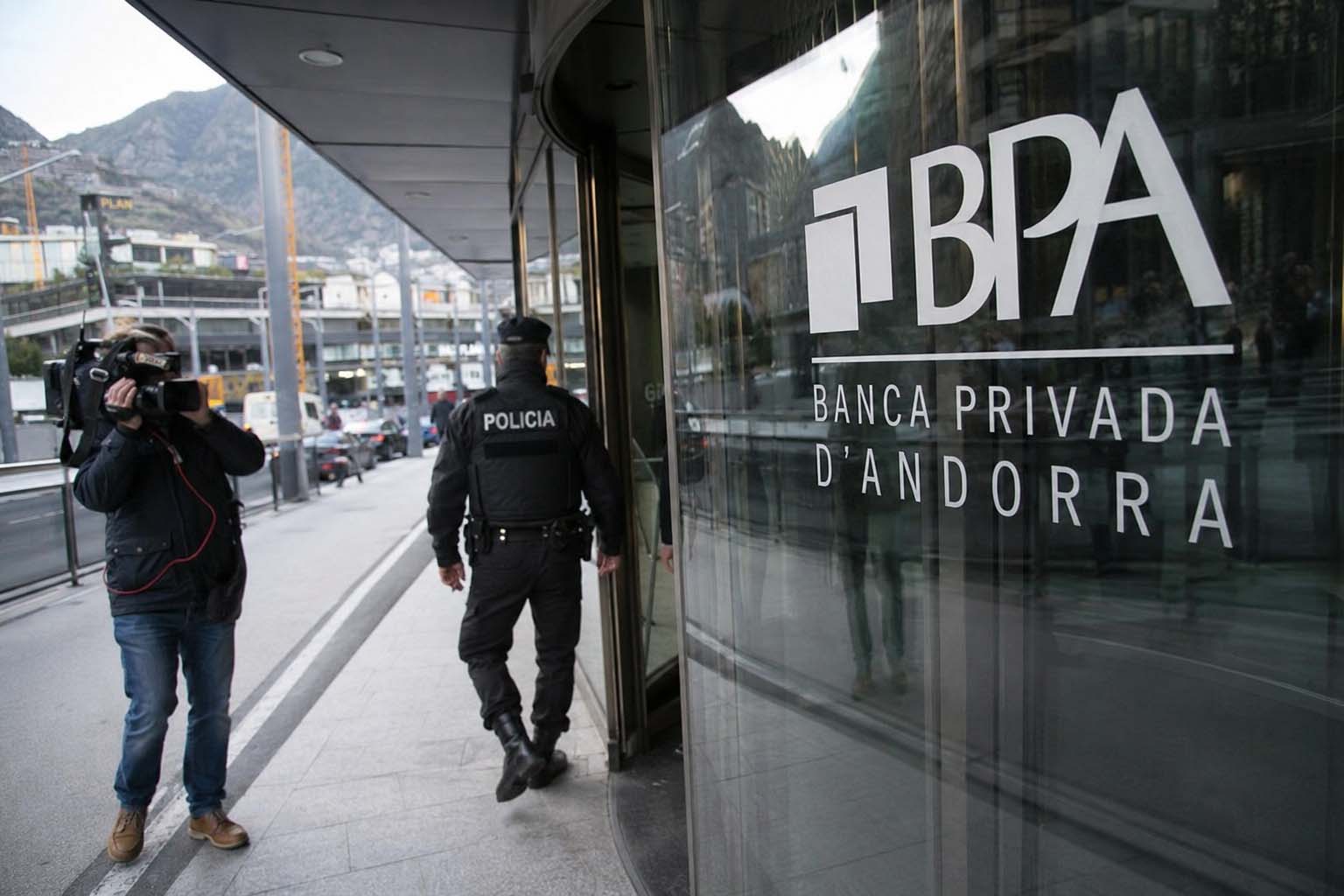
Tiny country. Enormous bank.
Nine years after investigators first opened their files, the Batllia — Andorra's first-instance court — published a judgment running to 6,180 pages and convicting 18 former executives of Banca Privada d'Andorra (BPA) of aggravated money laundering. At the centre of the ruling stands Joan Pau Miquel, the bank's CEO from 2007 until his arrest in 2015, who received the harshest sentence: seven years in prison, a €30 million fine, and a ten-year ban from holding any role in a financial institution. Miquel had spent roughly 22 months in pre-trial detention and maintained his innocence throughout. Behind him in the sentencing hierarchy sit executives including Santiago de Rosselló, the former compliance officer, condemned to six years and a €12 million fine, and Isabel Camino, Amaya de Santiago, and Sergi Fernández, each facing five-year terms and comparable financial penalties. The court found all 18 guilty of the same core charge: habitual money laundering carried out within a banking institution, specifically tied to the laundering of €70 million originating from the Chinese Gao Ming group. Of 24 people tried across 195 hearing days averaging six hours each, six were acquitted; sentences for the rest range from three-and-a-half to seven years, several suspended conditionally for four years, and four foreign nationals also face expulsion from the Principality for a decade. The case traces back to March 2015, when the US Treasury's FinCEN unit flagged BPA as a vehicle for international corruption networks, triggering the bank's immediate takeover by Andorran authorities and the creation of Vall Banc to absorb its clean assets. The article also notes that, over time, the origins of the American report have been linked to an alleged Spanish intelligence operation — known as Operació Catalunya — in which Spain is said to have used diplomatic and political channels to obtain compromising financial data on Catalan independence leaders.
Viktiga fakta
- 18 of 24 defendants were convicted; 6 were acquitted.
- Joan Pau Miquel, former CEO, received 7 years in prison, a €30 million fine, and a 10-year financial-sector ban.
- All convictions are for aggravated money laundering within a banking institution, marked by habitual conduct.
- The laundering involved €70 million linked to the Chinese Gao Ming group.
- The judgment runs to 6,180 pages and follows 195 days of oral hearings.
- Prison sentences range from 3.5 to 7 years; several are conditionally suspended for 4 years.
- Four foreign defendants were also ordered expelled from Andorra for 10 years.
- BPA collapsed in March 2015 after a US FinCEN report accused it of facilitating international money laundering.
- Vall Banc was created to absorb BPA's healthy assets after the state takeover.
- The case has been linked to the alleged Spanish intelligence operation known as Operació Catalunya.
The Collapse of the Silent Bank
There are countries so small that one might assume their secrets must be equally diminutive. Andorra is one of them. Wedged between the Pyrenees, cradled by mountains like a child beneath a blanket, the principality lived for decades on the notion that discretion was a virtue. Money arrived silently, remained polite, and disappeared again over the mountain passes, asking no questions. This was called stability. Only when one day men in suits carried files like gravediggers carry their shovels did it become clear that silence also earns interest. Behind the polished counters of Banca Privada d'Andorra, not only fortunes had accumulated, but stories whose origins no one wished to examine too closely. A place where bank employees were once regarded as keepers of trust became overnight a crime scene of international finance.
The trial dragged on longer than some governments endure. For seven years, documents filled shelves, lawyers changed places, and defendants waited for the sentence that would divide their previous lives into a before and after. In the end, the Tribunal de Corts imposed 84 years of imprisonment, of which 29 were unconditional, levied fines of nearly 66 million euros, and found 18 of the 24 defendants guilty. Numbers possess a peculiar coldness. They explain what happened, but never why people believed they could make an entire financial system stop looking.
No revolutionaries stood before the courthouse. There stood former bankers, lawyers, journalists, and onlookers. Some nodded approvingly, others shook their heads. In the cafés, people spoke less about legal codes than about betrayal. Was it betrayal of the law? Betrayal of a country? Or had Andorra itself paid the price for a business model that for decades was celebrated as a success, as long as no one asked where the money came from? Perhaps that is precisely where the tragedy of this trial lies. The judges ruled on accounts and transactions. But the country ruled on itself.
Djupanalys
BPA/Gao Ping-fallet är den största ekonomiska straffprocessen i Andorras historia. Det gäller den före detta privatbanken Banca Privada d'Andorra (BPA) och påstående om att cirka 70 miljoner euro kopplade till den kinesiske affärsmannen Gao Ping tvättades genom banken mellan 2008 och 2011. Rättegången inleddes i januari 2018 och avslutades med en dom den 15 juli 2025 av Tribunal de Corts – en process som varade mer än sju år. Tjugofjra personer åtalades, arton dömdes och sex frikändes. De samlade straffen uppgår till 84 års fängelse (29 år att avtjäna, 55 villkorliga), böter på cirka 65,8 miljoner euro och yrkesförbud totalt 135 år. Åklagaren hade sökt mycket hårdare straff: 141 års fängelse, 832 miljoner euro i böter och 240 års yrkesförbud. Den mest framstående dömde personen är Joan Pau Miquel, tidigare verkställande direktör för BPA, som dömdes till 7 års fängelse, 30 miljoner euro i bötesstraff och 10-årigt yrkesförbud. Han hade redan tillbringat 22 månader i häkte före domen. Andra betydande straff tilldelades vicedirektören Santiago de Rosselló (6 år, 12 miljoner euro, 10-årigt förbud), ansvarig för penningtvätt Isabel Camino (5 år, 5 miljoner euro, 10-årigt förbud), klientchef Amaya de Santiago (5 år, 5 miljoner euro, 10-årigt förbud) och penningtvättskommittémedlem Sergi Fernández (5 år, 5 miljoner euro, 10-årigt förbud). De övriga dömda tilldelades huvudsakligen villkorliga straff, böter mellan 15 000 och 2 miljoner euro och i vissa fall tiårig utvisningsorder och yrkesförbud. Domen är inte slutgiltig; alla dömda har rätt att överklaga till högre instans. Fallet har väckt intensiv debatt i Andorra, där meningarna är delade mellan de som ser utfallet som försenad rättvisa mot vittkragebrott, de som anser att det finns politisk inblandning och ifrågasätter rättskipningen, de som hävdar att Spaniens underrättelsetjänster orkestrerade BPA:s förstöring, och en mindre grupp som menar att handlingarna endast utgjorde skatteundandragande snarare än penningtvätt. Offentliga frågor återstår också om varför bankens ägare, Higini och Ramon Cierco, inte var bland åtalade och huruvida de omfattande bötesstraffen någonsin kommer att indelas.
Tidslinje
Händelseförloppet i detta mål, från det som hände till domstolens slutliga beslut, i den ordning domstolen själv presenterade det.
2008–2011
Påstått brott
Cirka 70 miljoner euro påstått kopplade till den kinesiske affärsmannen Gao Ping tvättades genom BPA enligt åtalet.
Januari 2018
Rättegångens början
Straffprocessen mot 24 åtalade inleddes inför Tribunal de Corts i Andorra.
Okänt datum
Häkte före rättegång
Den före detta BPA-chefen Joan Pau Miquel tillbringade 22 månader i häkte före eller under förfarandet.
15 juli 2025
Dom
Tribunal de Corts avkunnade sin dom: 18 fällanden och 6 frianförklaringar. Straffen inkluderade totalt 84 års fängelse, cirka 65,8 miljoner euro i böter och 135 års yrkesförbud.
Okänt datum
Överklagande
Domen är inte slutgiltig. Alla dömda kan lämna in överklagande till högre domstol.
Bevisstyrka
Hur mycket vikt varje bevis fick i domstolens resonemang — en längre, mörkare stapel betyder att domstolen lutade sig mer på det i sitt beslut. Detta återspeglar domstolens eget resonemang, inte en oberoende bedömning av målet.
Finansiella transaktioner (70 miljoner euro genom BPA kopplade till Gao Pings nätverk)
90/100Högre bankledningens handlande (verkställande direktör, viceordförande)
85/100Brister i AML-compliance (ansvarig för penningtvättbekämpning, medlem av penningtvättskommitté)
75/100Klientrelationschefen handlande gentemot kunder
65/100Inblandade personer
De personer som nämns i domen och den roll var och en spelade — till exempel den tilltalade, ett vittne eller en sakkunnig.
Joan Pau Miquel
Åtalad (dömd) · Före detta verkställande direktör för Banca Privada d'Andorra (BPA)
Santiago de Rosselló
Åtalad (dömd) · Viceordförande för BPA
Isabel Camino
Åtalad (dömd) · Ansvarig för penningtvättbekämpning på BPA
Amaya de Santiago
Åtalad (dömd) · Klientchef på BPA
Sergi Fernández
Åtalad (dömd) · Medlem i BPA:s penningtvättskommitté
Gao Ping
Omnämnd person (ej åtalad) · Kinesisk affärsman
Higini Cierco
Omnämnd person (ej åtalad) · Ägare av BPA (omnämnd i offentlig kommentar)
Ramon Cierco
Omnämnd person (ej åtalad) · Ägare av BPA (omnämnd i offentlig kommentar)
Varför domstolen beslutade så
Domstolens egna angivna skäl för sitt beslut, i den ordning de anges — ingen rangordning efter juridisk vikt, bara ordningen de presenteras i.
- Penningtvätt av cirka 70 miljoner euro genom BPA mellan 2008 och 2011, kopplad till den kinesiske affärsmannen Gao Pings nätverk
- Bankledningens och compliance-funktionens misslyckande att förhindra eller anmäla illegala finansiella flöden (aktuella roller: verkställande direktör, viceordförande, ansvarig för penningtvättbekämpning, klientrelationschef, medlem av penningtvättskommitté)
- Aktivt deltagande av flera banktjänstemän på olika hierarkiska nivåer i att underlätta tvättningsschemat
- Systematiska institutionella brister i BPA:s interna kontroller under en flerårig period
Vanliga frågor
Vad är BPA/Gao Ping-fallet i Andorra?
BPA/Gao Ping-fallet är den största ekonomiska straffprocessen i Andorras historia. Det gäller påstående om att cirka 70 miljoner euro kopplade till den kinesiske affärsmannen Gao Ping tvättades genom den före detta privatbanken Banca Privada d'Andorra (BPA) mellan 2008 och 2011. Tjugofjra personer ställdes inför rätta och Tribunal de Corts avkunnade sin dom den 15 juli 2025 efter rättegång som inleddes i januari 2018.
Vad blev resultatet av BPA-domen den 15 juli 2025?
Tribunal de Corts dömde 18 åtalade skyldiga och friade 6. De samlade straffen uppgår till 84 års fängelse (29 år ovillkorligt och 55 villkorligt), böter på cirka 65,8 miljoner euro och yrkesförbud totalt 135 år.
Vem är Joan Pau Miquel och vilket straff fick han?
Joan Pau Miquel är den före detta verkställande direktören för BPA. Han är den mest framstående dömde personen i rättegången. Rätten dömde honom till 7 års fängelse, 30 miljoner euro i böter och 10-årigt yrkesförbud. Han hade redan tillbringat 22 månader i häkte före domen.
Vilka anklagelser väcktes mot de åtalade i BPA-fallet?
De åtalade anklagades för penningtvätt i samband med cirka 70 miljoner euro som påstods ha passerats genom BPA mellan 2008 och 2011 och kopplade till den kinesiske affärsmannen Gao Ping.
Hur länge varade BPA-rättegången?
Förfarandet inleddes i januari 2018 och domen avkunnades den 15 juli 2025, vilket utgör en period på mer än sju år.
Vilka straff tilldelades övriga framstående åtalade?
Vicedirektören Santiago de Rosselló tilldelades 6 år, 12 miljoner euro i böter och 10-årigt yrkesförbud. Ansvarig för penningtvättbekämpning Isabel Camino, klientchef Amaya de Santiago och penningtvättskommitémedlem Sergi Fernández tilldelades vardera 5 år, 5 miljoner euro i böter och 10-årigt yrkesförbud.
Vilka straff tilldelades de övriga dömda åtalade?
De övriga dömda åtalade tilldelades huvudsakligen villkorliga straff, böter mellan 15 000 och 2 miljoner euro och i vissa fall tiårig utvisningsorder och yrkesförbud.
Vilka straff sökte åklagaren jämfört med vad rätten tilldelade?
Åklagaren sökte 141 års fängelse, 832 miljoner euro i böter och 240 års yrkesförbud. Rätten tilldelade totalt 84 års fängelse (29 ovillkorligt), cirka 65,8 miljoner euro i böter och 135 års yrkesförbud – betydligt lindrigare än vad som söktes.
Är BPA-domen slutgiltig?
Nej. Domen är inte slutgiltig. Alla dömda har rätt att överklaga till högre instans.
Varför var bankägarna Higini och Ramon Cierco inte bland de åtalade?
Domsummaret noterar att offentliga frågor återstår om varför bankägarna Higini och Ramon Cierco inte var bland de åtalade. Domstolens slutsats ger ingen förklaring till detta och ytterligare detaljer framgår inte av domentexten.
Vem är Gao Ping och hur är han kopplad till BPA?
Gao Ping beskrivs i fallet som en kinesisk affärsman. Anklagelserna handlar om cirka 70 miljoner euro kopplade till honom som påstods tvättats genom BPA mellan 2008 och 2011. Hans exakta roll enligt rätten framgår inte närmare från fallets sammanfattning.
Vilken domstol avkunnade BPA-domen?
Domen avkunnades av Tribunal de Corts, vilken är relevant straffdomstol i Andorra.
Vilken kontrovers omgärdar BPA-fallet bortom själva domen?
Domsummaret identifierar flera delar av offentlig kontrovers: vissa ser utfallet som försenad rättvisa mot vittkragebrott; andra hävdar att det finns politisk inblandning och ifrågasätter rättskipningen; några menar att Spaniens underrättelsetjänster orkestrerade BPA:s förstöring; och en mindre grupp hävdar att handlingarna endast utgjorde skatteundandragande snarare än penningtvätt. Frågor återstår också om huruvida de omfattande bötesstraffen någonsin kommer att indelas.
Hur många åtalade fanns i BPA-fallet och vad var de övergripande fällande och frianförklaringstal?
Tjugofjra personer ställdes inför rätta. Rätten dömde 18 skyldiga och friade 6.
Vilken betydelse har BPA-fallet för Andorras rätthistoria?
Fallet beskrivs som den största ekonomiska straffprocessen i Andorras historia, både avseende antalet åtalade, processens längd, de inblandade summorna och de pålagda straffen.
Avtjänade någon åtalad häkte före rättegång?
Ja. Domsummaret noterar särskilt att den före detta BPA-chefen Joan Pau Miquel hade tillbringat 22 månader i häkte före domen avkunnades. Huruvida övriga åtalade också avtjänade häkte före rättegång framgår inte av sammanfattningen.
Vilka professionella konsekvenser drabbade dömda långt ifrån fängelsestraffen?
Dömda drabbades av yrkesförbud totalt 135 år fördelat på alla dömda och i vissa fall tiåriga utvisningsorder. Högre tjänstemän tilldelades vardera 10-årigt yrkesförbud.
Finns det osäkerhet om huruvida bötesstraffen i BPA-fallet kommer att betalas?
Ja. Domsummaret noterar att offentliga frågor återstår om huruvida de omfattande bötesstraffen någonsin kommer att indelas. Detta identifieras som en olöst fråga efter domens avkunnande.
Vilka påstående gjordes om spanska underrättelsetjänster i samband med BPA-fallet?
Enligt domsummaret har vissa parter hävdat att Spaniens underrättelsetjänster orkestrerade BPA:s förstöring. Detta beskrivs som en strömning i den offentliga debatten kring fallet. Huruvida rätten tog ställning till eller gjorde fynd angående detta påstående framgår inte av sammanfattningen.
Vilken tidsperiod täckte det påstådda penningtvättet på BPA?
Det påstådda penningtvättet genom BPA kopplat till Gao Ping sägs ha förekommit mellan 2008 och 2011, en period på cirka tre år.
Vilken är det totala ekonomiska straffet pålagt alla åtalade i BPA-fallet?
De samlade bötesstraffen pålagda alla dömda uppgår till cirka 65,8 miljoner euro.
Vilket argument gjorde vissa observatörer angående arten av handlingarna på BPA, skilt från penningtvätt?
Domsummaret noterar att en mindre grupp observatörer hävdade att de inblandade handlingarna endast utgjorde skatteundandragande snarare än penningtvätt. Detta karakteriseras som en position i den omgivande offentliga debatten, inte ett domstolsfynd.
Varför det spelar roll
This is the first major criminal judgment in the BPA affair, one of the longest and most complex cases in Andorran legal history, establishing criminal accountability for systemic money laundering within a licensed bank. The ruling sets a precedent for how Andorra prosecutes financial crime at the executive level and underscores the real-world consequences of FinCEN designations for foreign banks. The case also carries geopolitical weight, given ongoing allegations that the original US report was weaponised as part of a Spanish state intelligence operation targeting Catalan independence figures.
Källor
Defendants vs. Convicted vs. Acquitted
Unconditional vs. conditional imprisonment
After the verdict, the real question remains
Verdicts are the closing point of a court. For a reporter, they are usually the beginning of a story. For no judge convicts a bank. Judges convict people. A bank possesses neither conscience nor greed. It knows no morality and no temptation. It is nothing more than a building full of rules, forms, computers, and people. When it lands in court, it is because those people decided to bend rules, ignore warnings, or stop asking questions.
The BPA trial is therefore far more than the story of a few former bank managers. It is the story of a culture of turning away. Money possesses a peculiar power. It demands no explanations. It does not speak. It does not object. It arrives, is counted, and disappears again. But eventually, every money flow begins to pose questions. Not to the customer, but to the bank. Where does this wealth come from? Why is cash being moved in unusual amounts? Why do transactions flow through companies whose economic purpose is obscure? Why do beneficial owners change as frequently as other people change their shirts?
The greatest defense of any bank has always been: We complied with the law. This is a sentence that seems reassuring at first glance. But laws are not walls; they are minimum standards. Between what is permitted and what would be responsible, there is often a wide space. International financial centers in particular thrive on interpreting this space as generously as possible. As long as no scandal emerges, this is considered business acumen. Only when investigators gather files does this same generosity transform into the suspicion of systematic negligence.
Could BPA have prevented this trial? Probably not once the first suspicions took concrete form. But it could have prevented the trial from being necessary at all. Every modern bank has instruments designed precisely for such situations: consistent identification of beneficial owners, comprehensive documentation of unusual transactions, reporting to the competent authorities, independent compliance departments with genuine decision-making authority, and above all, a corporate culture in which a lucrative customer is not more important than a clean conscience. Such systems cost money. Trials like this ultimately cost far more.
What is particularly instructive here is not the severity of the sentences, but the duration of the proceedings. Seven years of trial means millions of pages of paper, countless days of hearings, and a country that had to grapple with its own past for nearly a decade. The real damage did not occur first with the verdict. It occurred in the moment when trust disappeared. Banks live by trust as bridges live by their pillars. One only notices their importance when one begins to give way.
And one more thing this trial reveals. Major financial scandals rarely begin with spectacular crimes. They begin with small exceptions. A form is filled out late. An unusual payment seems plausible enough. A customer is too important to lose. A supervisor looks the other way. An exception becomes a habit. A habit becomes a system. And eventually, that system sits in the dock.
The story of BPA is therefore not a distinctly Andorran affair. It could just as easily have begun in Zurich, Luxembourg, Singapore, London, or New York. The financial center may have been small; the temptations were the same as anywhere in the world. Anyone who sees in this verdict merely the downfall of a few bankers misses the actual finding. What sat on the defendants' bench in the end was not just a bank. There sat the dangerous illusion that economic success could be permanently more important than careful oversight. This illusion has outlived many institutions. But some have not survived it.