Crime · Rakúsko · Landesgericht Feldkirch (Feldkirch Regional Court)
"Nie som tvoj brat": Sudca Odsúdi Poznámku o Bratstve Počas Procesu s Obvinením z Vlámania
Na súde v Feldkirchu sa prípad vlámania zrútil, keď si obete svoju výpoveď navzájom odporuje a sudcu zatúla pripomienkou "All good, bro" — čím vyvolala ostrú odpoveď sudcu: "Nie som tvoj brat."
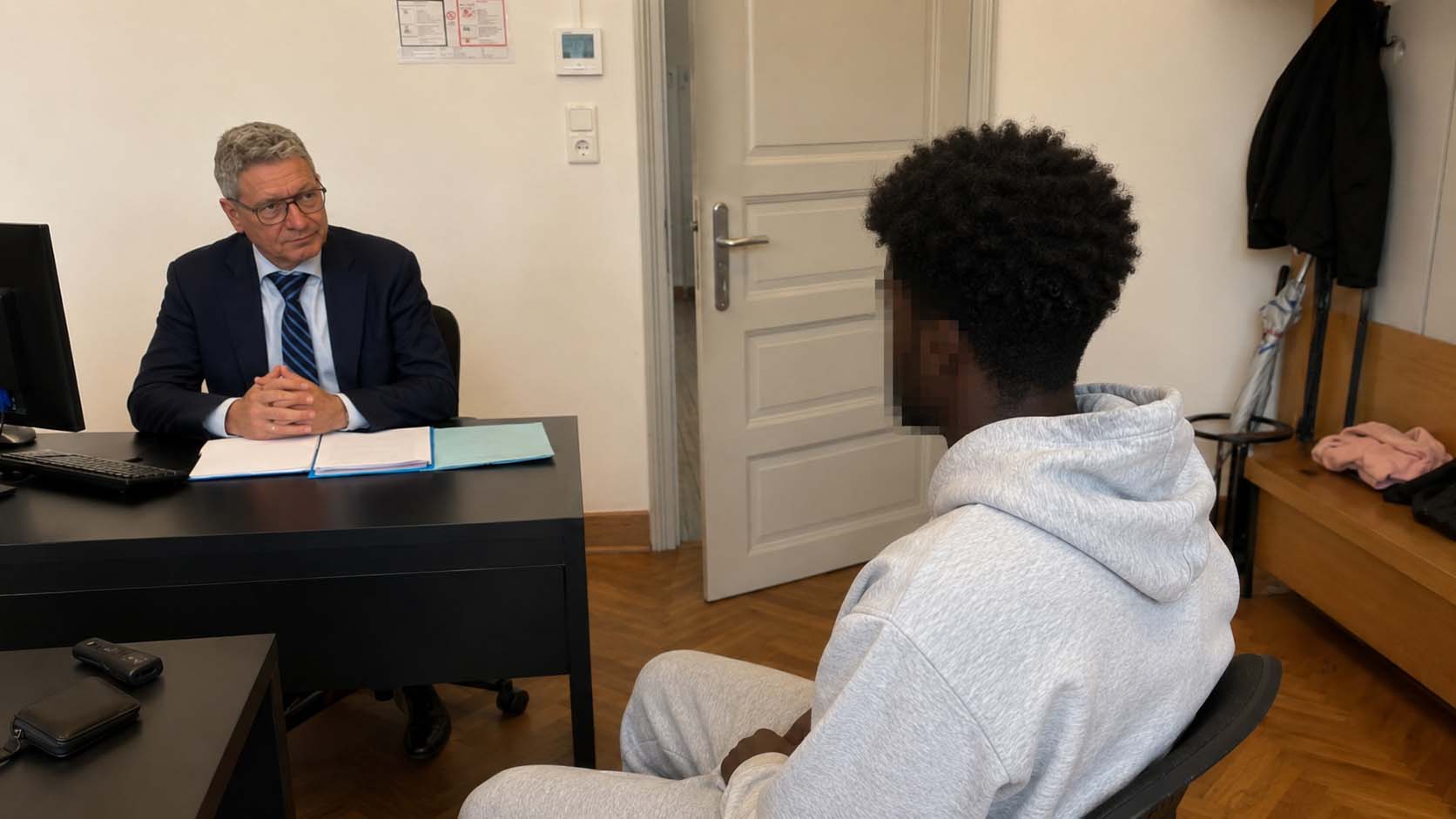
„Bro“: Das Landesgericht Feldkirch als Theaterbühne.
Súd v Feldkirchu čelil dramatickému kolapsu prípadu vlámania, keď si údajná obeť vymieňala svoju výpoveď pred súdom s tým, čo povedala polícii. Dvaja somálski muži boli obvinení z vlámania 100-eurového bankovca od muža v tme zákutia v Dornbirne na konci januára, ale keď sa obeť postavila pred súd, náhle tvrdila, že jeden z obvinených bol vlastne jej priateľ, ktorý prichádzal mediátorom. Keď ju sudca Elias Klingseis konfrontoval rozpornými výpovedami, reagovala s chladným "All good, bro" — čím sa vyvolala viditeľne rozzúrená odpoveď: "Nie som tvoj brat." Bez kredibilného svedka obžalovaní boli oslobodení od obvinenia z vlámania. Prvý obvinený však bol odsúdený za nelegálnu držbu drog a pokutený 600 eurami.
Kľúčové fakty
- Dvaja somálski muži boli obvinení z vlámania, ktoré sa údajne uskutočnilo koncom januára v Dornbirne v Rakúsku.
- Údajná obeť podstatne zmenila svoju výpoveď medzi policajným záznamom a súdnym pojednávaním.
- Obvinení tvrdia, že stretnutie bolo malý predaj konope za 20 eur, nie vlámanie.
- Bezpečnostný záznam potvrdil, že všetci traja muži opustili stávkovňu spolu, ale samotný predpokladaný trestný čin sa nikde nenafilmoval.
- Svedok oslabil sudcu Klingseisa označením ako "Bro", čo vyvolalo ostru odpoveď zo strany padka.
- Prokurátor uznala, že svedok "určite nepopísal celú pravdu".
- Obaja obvinení boli oslobodení od obvinenia z vlámania.
- Prvý obvinený bol uznaný za vinného z nelegálnej držby omamných látok a pokutený 600 eurami.
- Prvému obuvinému bolo predĺžené obdobie skúšobnej doby z predchádzajúceho odloženého trestu na päť rokov.
- Všetky rozsudky sú právne konečné.
Der Mann, der den Richter „Bro“ nannte
Es gibt Gerichtsverhandlungen, in denen das Urteil schon lange vor dem Richterspruch zu verschwinden scheint. Nicht, weil das Gesetz versagt hätte, sondern weil die Wahrheit unterwegs ihre Kleider gewechselt hat und schließlich in einer Gestalt erscheint, die niemand mehr erkennt.
In Feldkirch standen zwei Männer vor Gericht. Die Anklage erzählte von einem nächtlichen Raub: Ein Wettlokal, ein Hundert-Euro-Schein, eine dunkle Seitengasse und Gewalt. Es war eine Geschichte, wie sie die Akten lieben – geradlinig, geordnet und mit einem klaren Anfang. Doch Geschichten, die auf Papier funktionieren, verlieren außerhalb der Akten manchmal ihren Halt.
Die Überwachungskameras erwiesen sich als gewissenhafte Zeugen. Sie sahen drei Männer gemeinsam ein Lokal verlassen. Mehr nicht. Kameras beobachten Bewegungen, keine Absichten. Sie kennen Wege, aber keine Motive. Gerade dort, wo das Strafrecht beginnt, endet häufig ihre Sprache.
Die Angeklagten erzählten eine andere Geschichte. Kein Raub, sagten sie. Nur ein misslungener Handel um etwas Cannabis, dessen Wert kaum zwanzig Euro betragen habe. Ein kleiner Streit unter Männern, die sich in einer Nacht begegneten und am Morgen nichts mehr voneinander wissen wollten.
Der wichtigste Zeuge schien jede Version zu kennen – außer der eigenen. Was gestern noch wahr gewesen war, erschien heute plötzlich anders. Aus einem Belasteten wurde beinahe ein Freund. Aus einem Mitangeklagten ein Vermittler. Die Sätze wechselten ihre Richtung mit einer Leichtigkeit, die den Richter ratlos machte.
Schließlich legte der Vorsitzende die letzte Karte der Vernunft auf den Tisch.
„Diese Geschichte kaufe ich Ihnen nicht ab.“
Der Zeuge lächelte, als befände er sich nicht in einem Gerichtssaal, sondern auf einer Straßenecke.
„Alles gut, Bro.“
Es war nur ein einziges Wort. Kurz genug, um überhört zu werden, und doch lang genug, um den Abstand zwischen Gericht und Straße sichtbar zu machen. Der Richter antwortete kühl:
„Ich bin nicht Ihr Bruder.“
Vielleicht lag in diesem Satz mehr über unsere Zeit als in den vielen Seiten der Ermittlungsakten. Das Gericht verlangt Distanz, Sprache und Verantwortung. Der Alltag antwortet immer öfter mit Vertraulichkeit, Slang und Gleichgültigkeit.
Am Ende blieb vom großen Vorwurf des räuberischen Diebstahls nicht genügend übrig. Zweifel sind im Strafrecht keine Schwäche, sondern ein Schutz. Wo sich Tatsachen nicht mehr von Erzählungen unterscheiden lassen, darf keine Verurteilung stehen. So wurden beide Angeklagten freigesprochen.
Nur ein Nebenschauplatz blieb bestehen. Einer der Männer wurde wegen unerlaubten Suchtgiftbesitzes zu einer Geldstrafe verurteilt. Das große Verfahren schrumpfte auf ein kleines Delikt zusammen – wie ein Gewitter, das am Ende nur ein paar Regentropfen hinterlässt.
Wer den Saal verließ, nahm wahrscheinlich nicht die juristischen Feinheiten mit nach Hause. In Erinnerung blieb jener kurze Dialog zwischen einem Richter, der auf Würde bestand, und einem Zeugen, der die Förmlichkeit mit einem beiläufigen „Bro“ überbrücken wollte. Manchmal erzählt ein einziges Wort mehr über eine Epoche als ein ganzer Prozess.
Hĺbková analýza
Iba anglickyTwo Somali nationals were tried at the Regional Court of Feldkirch, Austria, on charges of aggravated robbery (räuberischer Diebstahl). They were accused of luring a man out of a betting shop in Dornbirn into a dark alleyway under the pretext of exchanging money, then taking a 100-euro banknote from him by force in late January. Both defendants completely denied the robbery, instead claiming the encounter involved only a small cannabis transaction worth 20 euros and that the alleged victim still owed them money. The case hinged almost entirely on the testimony of the alleged victim, as the only available video footage confirmed merely that the three men left the betting shop together — the alleged assault itself was not captured on any recording. The key witness severely undermined his own credibility by contradicting his earlier police statements at trial, most notably by suddenly claiming to be friends with the second defendant and stating that this defendant had actually acted as a mediator — a claim directly at odds with his prior statement to police, in which he had identified the second defendant as a primary perpetrator. Judge Elias Klingseis explicitly stated he did not believe the witness's revised account. The hearing also featured a notable courtroom exchange: when the judge told the witness 'I don't buy that story,' the witness replied 'All good, Bro,' prompting the judge to respond sharply, 'I am not your brother!' This moment became the most memorable episode of the proceedings. Applying the principle of in dubio pro reo (when in doubt, in favour of the accused), the court acquitted both defendants of the robbery charge, not because it was convinced of their innocence, but because the evidence did not meet the required standard of proof. The objective evidence was insufficient, and the sole incriminating witness was found to be not credible. However, the first defendant, who had relevant prior convictions, faced an expanded charge: he was convicted of unlawful possession of narcotics, fined 600 euros, and had a previously imposed probationary period extended to five years. All verdicts are legally final.
Časová os
Priebeh udalostí v tomto prípade, od toho, čo sa stalo, až po konečné rozhodnutie súdu, v poradí, ako ho sám súd uviedol.
End of January (exact date not specified)
Act
Alleged robbery: the victim was reportedly lured from a betting shop in Dornbirn into a dark alleyway under the pretext of exchanging money, and a 100-euro note was allegedly taken from him by force.
Date unknown
Investigation
Police investigation conducted. The alleged victim gave a statement to police, primarily implicating the second defendant as the main perpetrator. Video footage from the area was reviewed, confirming only that the three men left the betting shop together.
Date unknown
Indictment
Both defendants charged with aggravated robbery (räuberischer Diebstahl). The charge against Defendant 1 was later expanded to include unlawful possession of narcotics.
Date unknown
Trial
Trial held at Landesgericht Feldkirch before Judge Elias Klingseis. Both defendants denied the robbery entirely, claiming the interaction was a 20-euro cannabis deal and that the victim still owed them money. The key witness contradicted his police statement, claiming to be friends with Defendant 2 and stating Defendant 2 had acted as a mediator. The judge stated he did not believe the witness's revised account. The notable 'Bro' exchange occurred between the judge and the witness.
Date unknown
Verdict
Both defendants acquitted of aggravated robbery due to insufficient evidence and the unreliability of the key witness. Defendant 1 convicted of unlawful narcotics possession, fined 600 euros, and had his probationary period extended to five years. All verdicts are legally final.
Sila dôkazov
Akú váhu mal každý dôkaz v odôvodnení súdu — dlhší, tmavší pruh znamená, že sa oň súd pri rozhodovaní viac opieral. Odráža to odôvodnenie súdu, nie nezávislé posúdenie prípadu.
Contradictory witness testimony of alleged victim
15/100Video footage (shows joint departure from betting shop only)
30/100Defendants' consistent denial and alternative account (cannabis deal)
40/100Absence of physical or forensic evidence of violence
10/100First defendant's prior criminal record (relevant only to narcotics charge)
5/100Zúčastnené osoby
Osoby uvedené v rozsudku a úloha, ktorú každá z nich zohrala — napríklad obžalovaný, svedok alebo znalec.
Defendant 1 (First Accused)
Defendant · Somali national accused of aggravated robbery alongside Defendant 2.
Defendant 2 (Second Accused)
Defendant · Somali national accused of aggravated robbery alongside Defendant 1.
Alleged Victim (Key Witness)
Complainant / Primary prosecution witness · The man allegedly robbed in the alleyway; the sole direct witness to the alleged assault.
Judge Elias Klingseis
Presiding Judge · Judge at Landesgericht Feldkirch; presided over the trial and delivered the verdict.
Prečo súd rozhodol takto
Dôvody, ktoré súd sám uviedol pre svoje rozhodnutie, v poradí, v akom sú uvedené — nejde o rebríček podľa právneho významu, len o poradie uvedenia.
- The sole prosecution witness (the alleged victim) contradicted his own earlier statements multiple times, rendering his testimony substantially incredible to the court
- No objective evidence of a violent theft existed: video footage only confirmed the three men left the betting shop together, not any assault or robbery
- The reasonable doubt standard ('in dubio pro reo') could not be satisfied given the contradictory and unreliable witness testimony and absence of corroborating evidence
- Both defendants consistently denied the robbery and offered an alternative explanation (a cannabis transaction of 20 euros with an outstanding debt), which could not be conclusively disproven
- The witness's in-court revision — claiming friendship with the second defendant and that the second defendant had even mediated — directly contradicted his police statement, further undermining the prosecution case
Často kladené otázky
What were the main charges in this case?
The two defendants were charged with räuberischer Diebstahl (aggravated robbery). The first defendant additionally faced a charge of unerlaubter Besitz von Suchtgift (unlawful possession of narcotics).
What was the outcome of the robbery charge for both defendants?
Both defendants were acquitted of the aggravated robbery charge. The court found that the evidence did not meet the required standard of proof.
What legal principle did the court apply to reach the acquittal?
The court applied the principle of in dubio pro reo, meaning 'when in doubt, in favour of the accused.' The acquittal was not based on a finding of innocence but on the insufficiency of the evidence.
Did the court believe the defendants were innocent of the robbery?
Not necessarily. The court explicitly did not convict because the evidence standard was not met, not because it was affirmatively convinced of the defendants' innocence.
What did the defendants say happened during the encounter?
The defendants denied the robbery entirely. They claimed the encounter involved only a small cannabis transaction worth 20 euros and stated that the alleged victim still owed them money.
What did the alleged victim claim happened?
The alleged victim claimed he was lured from a betting shop in Dornbirn into a dark alleyway under the pretext of a money exchange, and that the defendants then took a 100-euro banknote from him by force.
Why was the key witness found to be not credible?
The witness severely contradicted his earlier police statement at trial. Most notably, he suddenly claimed to be friends with the second defendant and said that defendant had acted as a mediator — directly contradicting his prior statement to police in which he had identified that same defendant as a primary perpetrator.
What did the judge say about the witness's revised account?
Judge Elias Klingseis explicitly stated that he did not believe the witness's revised account.
Was there any video evidence in this case?
Yes, but it was limited. Available video footage confirmed only that the three men left the betting shop together. The alleged assault itself was not captured on any recording.
What was the memorable courtroom exchange between the judge and the witness?
When the judge told the witness 'I don't buy that story,' the witness replied 'All good, Bro.' The judge then responded sharply, 'I am not your brother!'
What happened to the first defendant beyond the robbery charge?
The first defendant was convicted of unlawful possession of narcotics, fined 600 euros, and had a previously imposed probationary period extended to five years.
Was the second defendant convicted of anything?
Not evident in the judgment beyond the acquittal on the robbery charge. No ancillary conviction is mentioned for the second defendant.
Why did the first defendant face an expanded charge compared to the second defendant?
The first defendant had relevant prior convictions, which supported the additional narcotics possession charge and the extension of his probationary period.
Where did the alleged robbery take place?
The alleged robbery took place in Dornbirn, Austria, in a dark alleyway near a betting shop, in late January.
Which court heard this case?
The case was heard at the Regional Court of Feldkirch, Austria.
Who was the presiding judge?
The presiding judge was Judge Elias Klingseis.
Are the verdicts subject to appeal?
The judgment states that all verdicts are legally final.
What was the alleged value of the item taken in the robbery?
The alleged victim claimed a 100-euro banknote was taken from him by force.
What was the alleged value of the cannabis transaction according to the defendants?
The defendants claimed the transaction involved cannabis worth 20 euros.
How many witnesses were available to support the robbery charge?
The case hinged almost entirely on the testimony of the alleged victim, who was the sole incriminating witness. No other witnesses corroborating the robbery are mentioned in the judgment.
What is räuberischer Diebstahl under Austrian law?
The judgment characterizes räuberischer Diebstahl as aggravated robbery. Beyond this characterization in the case summary, further statutory detail is not evident in the judgment.
Did the defendants' nationality play any stated role in the court's reasoning?
Not evident in the judgment. The defendants' Somali nationality is noted as background context but no role in the court's legal reasoning is described.
Prečo na tom záleží
Tento prípad demonštruje, ako sa väčší trestný proces môže úplne zrútiť, keď kľúčový svedok zmení svoju výpoveď, čím sudcovi znemožní zistiť fakty nad akúkoľvek pochybnosť. Zároveň poukazuje na to, ako narkotické stretnutia vytvárajú konfliktné výpovede, ktoré komplikujú objasňovanie pravdy, a ako môžu súdy stále nasledovať vedľajšie obvinenia — v tomto prípade držbu drog — keď zlyhá hlavné obvinenie.
Zdroje
Österreichische Wiederverurteilungsquote
Einordnung: Der Preis des Zweifels
Ein Gericht ist kein Theater. Und doch gibt es Tage, an denen die Bühne besser besetzt ist als das Stück.
Man mag über den Aufwand den Kopf schütteln. Polizei, Staatsanwaltschaft, Richter, Verteidiger, Dolmetscher, Protokollführung – ein ganzer Staatsapparat setzte sich in Bewegung wegen eines mutmaßlichen Schadens von hundert Euro, vielleicht aber auch nur wegen eines misslungenen Cannabisgeschäfts im Wert von zwanzig Euro. Wer den Steuerzahler fragt, wird darin Verschwendung sehen. Wer den Rechtsstaat fragt, erhält eine andere Antwort: Nicht der Geldbetrag entscheidet darüber, ob ein Strafverfahren geführt wird, sondern der Verdacht einer schweren Straftat.
Und schwer war der Vorwurf allemal. Räuberischer Diebstahl gehört zu jenen Delikten, bei denen Eigentum und Gewalt zusammentreffen. Wäre das Gericht von der Anklage überzeugt gewesen, hätte den Angeklagten keine Bagatelle gedroht, sondern eine empfindliche Freiheitsstrafe. Aus einem nächtlichen Gang vom Wettlokal in eine Seitengasse hätte leicht der Beginn einer langen Haft werden können.
Doch zwischen Verdacht und Verurteilung liegt die Beweisführung. Für einen Schuldspruch hätte das Gericht überzeugt sein müssen, dass sich der Vorwurf tatsächlich so ereignet hat, wie ihn die Anklage schilderte. Es hätte glaubwürdige, in sich stimmige Aussagen oder objektive Beweise gebraucht, die sich gegenseitig stützen. Genau daran scheiterte der Fall. Der Hauptzeuge widersprach sich, die Videoaufnahmen endeten dort, wo die entscheidenden Minuten begannen, und die alternative Erklärung der Angeklagten ließ sich ebenso wenig sicher widerlegen wie bestätigen. Das Strafrecht kennt für solche Situationen nur eine Antwort: Im Zweifel darf nicht verurteilt werden.
Mancher wird dieses Ergebnis unbefriedigend finden. Doch ein Freispruch bedeutet nicht zwangsläufig, dass nichts geschehen ist. Er bedeutet lediglich, dass das Geschehene nicht mit der erforderlichen Sicherheit bewiesen werden konnte. Diese Unterscheidung ist unbequem – aber sie schützt jeden Bürger vor Verurteilungen auf bloßen Verdacht.
Bleibt die Frage, ob die Angeklagten aus diesem Verfahren etwas gelernt haben. Darauf kennt kein Gericht eine Antwort. Der eine wurde immerhin wegen unerlaubten Suchtgiftbesitzes verurteilt und war bereits einschlägig vorbestraft. Das lässt erkennen, dass dies nicht sein erster Konflikt mit dem Gesetz war. Ob er künftig Abstand von Straftaten nimmt oder erneut vor Gericht erscheinen wird, kann niemand seriös vorhersagen. Rückfallstatistiken beschreiben Wahrscheinlichkeiten, aber niemals das Schicksal eines einzelnen Menschen.
Vielleicht ist die eigentliche Lehre dieses Prozesses eine andere. Nicht der lässige Zuruf „Bro“, der für einen kurzen Moment die Aufmerksamkeit auf sich zog, bleibt von Bedeutung. Entscheidend ist, dass ein Rechtsstaat bereit ist, auch einen kleinen, verworrenen und unerquicklich wirkenden Fall mit derselben Sorgfalt zu behandeln wie einen großen. Denn das Gewicht der Gerechtigkeit bemisst sich nicht nach der Höhe des Geldscheins, sondern nach der Gründlichkeit, mit der sie nach der Wahrheit sucht.