Money · Albania · Tirana Prosecution Office
Tirana Prosecution Seizes Apartments and Garage Belonging to Man Sentenced to 10 Years for Narcotic Trafficking
The Tirana Prosecution Office has seized two apartments and a garage belonging to Arben Alla, who was sentenced to 10 years in prison for drug trafficking, after investigators found his assets were disproportionate to his lawfully declared income.
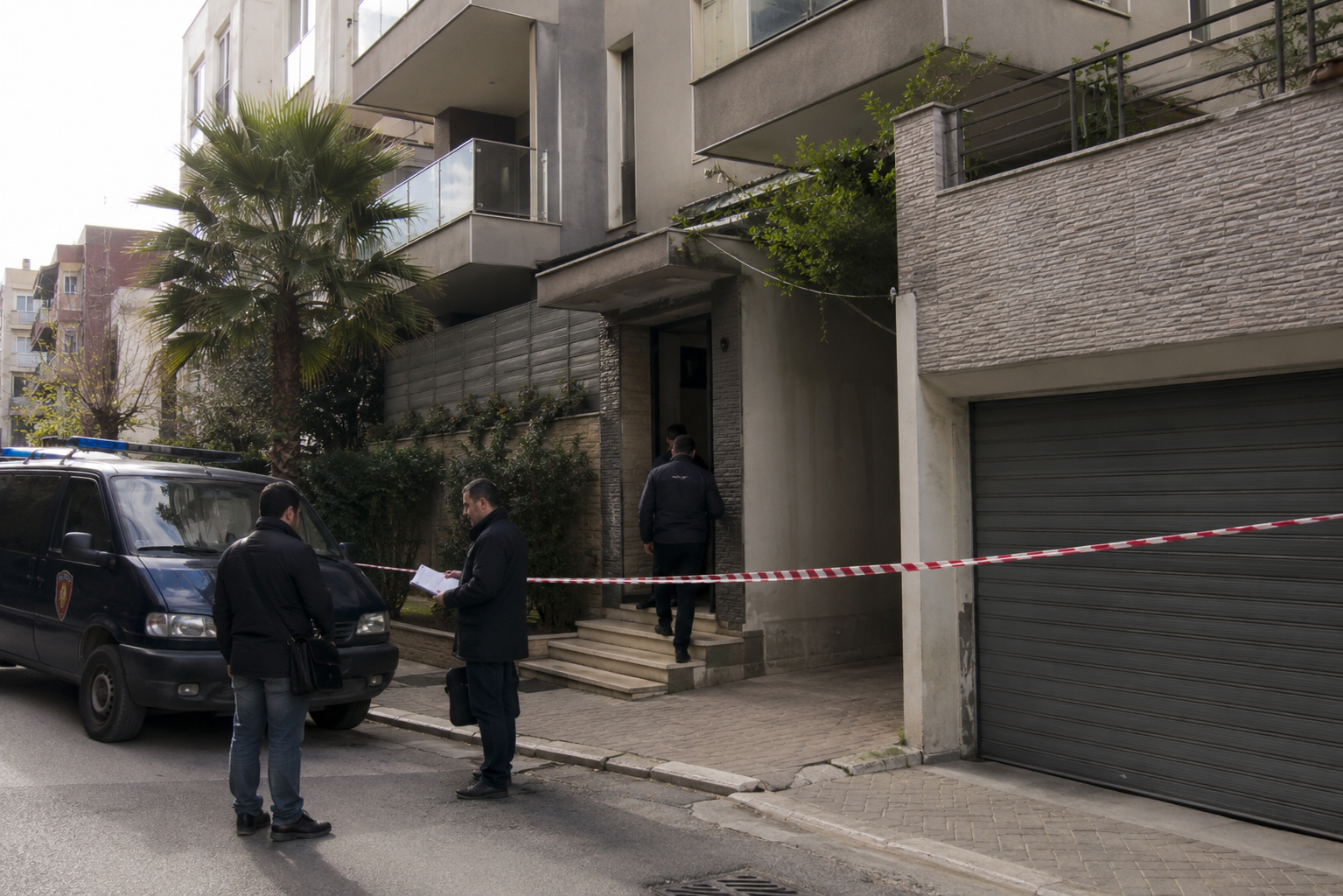
Eine Straße in der albanischen Hauptstadt Tirana.
The Tirana Prosecution Office initiated asset investigation proceedings (No. 02 of 2026) against Arben Alla, a citizen convicted of narcotic trafficking under Article 283/a of the Albanian Criminal Code and sentenced to 10 years' imprisonment. Investigators determined that Alla and his family members lacked sufficient documented income to account for their personal expenses and property investments. A forensic accounting report confirmed a substantial discrepancy between the assets held by Alla and his relatives and their declared lawful income. On this basis, authorities seized a one-bedroom apartment (66.33 m² with a 44 m² terrace) on Xhanfize Keko Street and a two-bedroom apartment (87.9 m² with a 16 m² garage) on Kahreman Ylli Street. The seizures were carried out pursuant to Articles 11 and 24 of Albanian Law No. 10192, dated 3 December 2009, which governs asset forfeiture in cases of serious crime.
Fapte esențiale
- Arben Alla was sentenced to 10 years in prison for narcotic trafficking under Article 283/a of the Albanian Criminal Code.
- Asset investigation proceedings No. 02 of 2026 were opened against Alla by the Tirana Prosecution Office.
- A forensic accounting report found a substantial discrepancy between Alla's assets and his declared lawful income.
- Alla's family members were also subjects of the asset investigation.
- A one-bedroom apartment (66.33 m²) with a 44 m² terrace on Xhanfize Keko Street was seized.
- A two-bedroom apartment (87.9 m²) and a 16 m² garage on Kahreman Ylli Street were also seized.
- The seizures were based on Articles 11 and 24 of Law No. 10192, dated 3 December 2009.
- The seized assets may be subject to full confiscation following further legal proceedings.
The Apartments of Silence
There are houses that carry their secrets behind freshly painted facades. From the outside, they hardly differ from their neighbors. Laundry dries on the balconies, children play in the courtyard, somewhere an air conditioner hums against the July heat. Only the men who appear one morning with briefcases and official composure reveal that this house will cease to be ordinary for a few hours.
They do not come to arrest anyone. The verdict has long been delivered. Ten years in prison for drug smuggling. The convicted man is already behind walls that do not open. Today's visit is about the things that remained outside: two apartments, a terrace, a garage, and that silent question of who property really belongs to.
The public prosecutor speaks of asset forfeiture. The auditors speak of numbers. The judges speak of statutes. But houses know nothing of statutes. They know only doors that are opened and closed.
The investigators had calculated. Income against expenses. Salaries against purchase contracts. What should have fit together on paper refused to add up. Money was missing somewhere, or there was too much of it. The difference eventually received a name: unexplained assets.
Thus two apartments became evidence.
The first measures barely more than sixty-six square meters. Its terrace is almost as large as some worker's apartment. Perhaps someone drank their first coffee of the day there. Perhaps geraniums stood there. Perhaps one looked out from there at Tirana and believed one had arrived.
The second apartment is larger. Almost eighty-eight square meters. Plus a garage, sixteen square meters of concrete, large enough for a car and small enough to occupy only one line in a court file.
It is peculiar how little walls tell about their owners. They know nothing of drug trafficking. Nothing of investigations. Nothing of Article 283/a of the Penal Code or of Law No. 10192 on the confiscation of criminal assets. They simply stand there and wait until others decide their fate.
The investigation did not end with the convicted man. The financial circumstances of his relatives were also examined. For money that originates from illegal activity rarely stops at the front door of its first owner. It wanders through accounts, contracts, and family histories until its origins seem almost forgotten. Only then does the auditor begin to trace this path backward—patiently, page by page, transaction by transaction.
It is a peculiar form of modern criminology. Once one sought the perpetrator. Today one seeks the money.
The judges later decide whether preliminary seizure becomes permanent confiscation. Until then, the apartments remain in a kind of legal limbo. They belong to no one entirely and yet still exist, as if waiting for their next resident or their next entry in the property register.
Perhaps therein lies the true punishment of our time. No longer merely the deprivation of liberty, but the loss of those things that convey the appearance of a successful life: a balcony, a terrace, a garage door, behind which no car waits any longer.
Thus this case does not end with handcuffs and police sirens. It ends quietly. With case numbers. With property register pages. With the keys to two apartments that now lie in a drawer of the public prosecutor's office and remain silent like their former owners.
Analiză aprofundată
Doar în englezăThis case involves Harben Alla (also referred to as Arben Alla or A.A.), a 54-year-old man who was convicted of drug trafficking under Article 283/a of the Albanian Criminal Code and sentenced to ten years' imprisonment. Following that final criminal conviction, the Tirana Prosecution Office opened a separate asset investigation proceeding (Case No. 02/2026) focused not on guilt but on the origin of his wealth. A forensic financial audit was commissioned, and the experts concluded that a significant, economically unexplainable gap existed between Alla's officially declared legal income and his actual assets. Neither Alla nor his close family members were found to have sufficient legal income sources to account for their living expenses, property acquisitions, and investments. On the basis of this finding, courts ordered the preventive seizure of three properties in Tirana: a 66.33 m² apartment with a 44 m² terrace on Xhanfize-Keko Street, an 87.9 m² apartment on Kahreman-Ylli Street, and a 16 m² garage. Albanian media report the combined estimated market value of these assets at approximately 420,000 euros. The seizure was carried out under Albanian Law No. 10192 of 3 December 2009, specifically Articles 11 and 24, through Police Operation 'De facto', conducted by the Tirana Police Department for Combating Money Laundering and Criminal Assets jointly with the prosecution. The assets of Alla's family members were also examined, not because they are accused of crimes, but because the law permits inclusion of assets that may be economically attributable to the convicted person or financed through criminal proceeds. It is important to note that the current measure is a preventive seizure only; a separate court proceeding will determine whether the properties will be permanently confiscated. Authorities have stated that investigations are ongoing, further assets are being sought, and assets of associated persons continue to be examined. The case is described as part of a broader Albanian judicial strategy of pursuing asset recovery following drug trafficking convictions, in alignment with European legal standards.
Cronologie
Succesiunea evenimentelor în acest caz, de la fapte până la decizia finală a instanței, în ordinea prezentată chiar de instanță.
Date unknown
Conviction
Harben Alla was finally convicted of drug trafficking under Article 283/a of the Albanian Criminal Code and sentenced to ten years' imprisonment.
Date unknown (Case No. 02/2026 opened after conviction)
Asset Investigation Opened
The Tirana Prosecution Office opened a separate asset investigation proceeding (Az. 02/2026) to examine whether Alla's assets could be explained by legal income. Tax data, land registry entries, income records, living expenses, asset movements, and finances of close relatives were reviewed.
Date unknown
Forensic Audit
A forensic financial audit was commissioned by the prosecution. Experts found a significant, economically unexplainable gap between officially declared legal income and actual assets held by Alla and his family members.
Date unknown
Seizure Order
Courts ordered the preventive seizure of three properties: a 66.33 m² apartment with 44 m² terrace on Xhanfize-Keko Street, an 87.9 m² apartment on Kahreman-Ylli Street, and a 16 m² garage, all in Tirana.
Date unknown
Police Operation
Police Operation 'De facto' was executed by the Tirana Police Department for Combating Money Laundering and Criminal Assets, jointly with the prosecution, to implement the court's seizure order.
Ongoing (as of date of report)
Ongoing Investigation
Authorities stated that investigations continue, further assets are being sought, and assets of associated persons are being examined. No permanent confiscation has yet been ordered.
Forța probelor
Cât de multă greutate a avut fiecare probă în raționamentul instanței — o bară mai lungă și mai închisă la culoare înseamnă că instanța s-a bazat mai mult pe ea în decizia sa. Acest lucru reflectă raționamentul instanței, nu o evaluare independentă a cazului.
Forensic financial expert opinion (income-to-wealth gap)
95/100Tax and income records
85/100Land registry entries
80/100Prior drug-trafficking conviction
80/100Asset movement and investment records
70/100Living-cost analysis
60/100Financial review of relatives' assets
55/100Persoane implicate
Persoanele menționate în hotărâre și rolul jucat de fiecare — de exemplu inculpatul, un martor sau un expert.
Harben Alla (also referred to as Arben Alla or A.A.)
Convicted person / Subject of asset proceedings · Private individual; convicted drug trafficker
Tirana Prosecution Office
Prosecuting authority · Initiated and conducted the asset investigation proceeding (No. 02/2026); commissioned the forensic financial audit; cooperated in executing the seizure
Tirana Police Department for Combating Money Laundering and Criminal Assets
Law enforcement authority · Executed Police Operation 'De facto' to implement the court-ordered seizure of assets
Forensic Financial Experts (unnamed)
Expert witnesses / Auditors · Conducted forensic financial audit comparing Alla's declared legal income against actual assets
Alla's family members (unnamed)
Third parties under financial scrutiny · Not accused of crimes; their financial circumstances were examined to determine whether assets nominally held by them are economically attributable to Alla or financed by criminal proceeds
De ce a decis instanța astfel
Motivele indicate chiar de instanță pentru hotărârea sa, în ordinea în care apar — nu o ierarhie după importanța juridică, doar ordinea prezentării.
- Forensic financial audit revealed an unexplainable gap between legally declared income and actual assets of Harben Alla and his family members
- Prior criminal conviction of Harben Alla for drug trafficking under Article 283/a of the Albanian Criminal Code (10-year prison sentence), forming the predicate offence for asset proceedings
- Neither Alla nor his family members could demonstrate sufficient legal income sources to account for acquisition of the seized real properties, living expenses, and investments
- Application of Albanian Law No. 10192 of 3 December 2009 (Articles 11 and 24) authorising preventive seizure of assets not explicable by lawful income, including assets of related persons potentially attributable to the convicted individual
- Assets of family members were included in the review on grounds that they may be economically attributable to Alla or financed through criminal proceeds
Întrebări frecvente
Who is Harben Alla and what was he convicted of?
Harben Alla, also referred to as Arben Alla or A.A. in the judgment, is a 54-year-old man who received a final criminal conviction for drug trafficking under Article 283/a of the Albanian Criminal Code and was sentenced to ten years' imprisonment.
What is Case No. 02/2026 and how does it differ from the criminal case?
Case No. 02/2026 is a separate asset investigation proceeding opened by the Tirana Prosecution Office after the criminal conviction became final. Unlike the criminal case, which determined guilt, this proceeding focuses exclusively on the origin of Alla's wealth and whether his assets can be legally explained.
What three properties were placed under preventive seizure?
The three properties are: a 66.33 m² apartment with a 44 m² terrace on Xhanfize-Keko Street in Tirana, an 87.9 m² apartment on Kahreman-Ylli Street in Tirana, and a 16 m² garage.
What is the estimated value of the seized assets?
Albanian media report the combined estimated market value of the three seized properties at approximately 420,000 euros. This figure appears in the summary sourced from media reports, not as a formal court valuation stated in the judgment itself.
What legal basis was used to order the seizure?
The seizure was ordered under Albanian Law No. 10192 of 3 December 2009, specifically Articles 11 and 24 of that law, which govern preventive seizure of assets linked to criminal activity.
What is a preventive seizure and does it mean the properties are permanently confiscated?
A preventive seizure is a temporary legal measure that freezes assets while further proceedings take place. According to the judgment summary, a separate court proceeding will still determine whether the properties will be permanently confiscated. Permanent confiscation has not yet been decided.
What role did the forensic financial audit play in this case?
A forensic financial audit was commissioned as part of the asset investigation. Experts concluded that a significant and economically unexplainable gap existed between Alla's officially declared legal income and his actual assets, which formed the primary evidentiary basis for the seizure order.
Why were the assets of Alla's family members examined?
Albanian law permits the inclusion of assets that may be economically attributable to the convicted person or financed through criminal proceeds, even if those assets are held by close family members. The family members are not accused of any crime; their finances were examined solely to determine whether those assets are connected to Alla's criminal activity.
Does the examination of family members' assets mean they are charged with a crime?
No. The judgment summary explicitly states that family members' assets were examined not because they are accused of crimes, but because Albanian law allows inclusion of assets that may be economically attributable to the convicted person or financed through criminal proceeds.
Which police unit and prosecution office carried out the seizure?
The seizure was executed through Police Operation 'De facto', conducted jointly by the Tirana Police Department for Combating Money Laundering and Criminal Assets and the prosecution.
What was the legal standard used to show the assets were unexplained?
According to the judgment summary, the standard applied was a demonstrated disproportion: neither Alla nor his close family members had sufficient legal income sources to account for their living expenses, property acquisitions, and investments. The forensic experts identified this gap as economically unexplainable.
Are investigations ongoing, or is this case fully resolved?
Investigations are ongoing. Authorities have stated that further assets are being sought and assets of associated persons continue to be examined. The current preventive seizure is not the final resolution of the asset proceedings.
How does this case relate to broader Albanian anti-corruption or asset recovery policy?
The judgment summary describes the case as part of a broader Albanian judicial strategy of pursuing asset recovery following drug trafficking convictions, stated to be in alignment with European legal standards.
What is Article 283/a of the Albanian Criminal Code?
Article 283/a is the provision of the Albanian Criminal Code under which Alla was convicted of drug trafficking. The judgment summary does not provide further detail about the specific conduct underlying the charge beyond identifying it as drug trafficking.
What is the difference between the criminal proceeding and the asset proceeding in this case?
The criminal proceeding resulted in Alla's conviction and ten-year prison sentence for drug trafficking. The asset proceeding (Case No. 02/2026) is a separate civil or administrative investigation focused solely on whether his wealth can be explained by legal income, and it can result in asset seizure or confiscation independent of the criminal sentence.
Could Alla face further legal consequences beyond the ten-year sentence?
Based on the judgment summary, the asset proceedings could result in permanent confiscation of the seized properties. Additionally, authorities have stated investigations are continuing and further assets may be identified. However, any such outcomes remain to be decided by a court.
What types of assets were targeted and why real estate specifically?
Three real estate properties were targeted: two residential apartments and a garage, all in Tirana. The summary does not explain why real estate was targeted specifically beyond the finding that these assets could not be explained by legal income sources.
Is this case a criminal confiscation or a civil/administrative forfeiture?
Based on the judgment summary, the asset seizure is described as a separate proceeding from the criminal case, focused on the origin of wealth rather than on criminal guilt. The preventive seizure is carried out under a dedicated asset recovery law (Law No. 10192), suggesting a civil or administrative forfeiture framework rather than a criminal confiscation order within the original criminal trial.
What happens next after the preventive seizure is ordered?
According to the judgment summary, a separate court proceeding will determine whether the properties will be permanently confiscated. Investigations are also continuing, with authorities examining additional assets and those of associated persons.
Is there any indication Alla contested the seizure or the underlying conviction?
Not evident in the judgment. The summary describes the criminal conviction as final and the asset proceedings as initiated on that basis, but does not describe any challenge by Alla to either the conviction or the preventive seizure order.
What does 'economically unexplainable gap' mean in the context of this case?
In this case, it refers to the forensic experts' finding that the difference between Alla's officially declared legal income and the value of his actual assets and lifestyle expenditures could not be accounted for by any legitimate income source identified for him or his close family members.
What is the significance of Law No. 10192 of 3 December 2009 in Albanian asset recovery?
Law No. 10192 of 3 December 2009 is the Albanian legal framework governing the seizure and confiscation of assets linked to criminal activity. In this case, Articles 11 and 24 of that law provided the specific legal authority for the preventive seizure of Alla's three Tirana properties.
De ce contează
This case illustrates Albania's use of civil asset forfeiture mechanisms under Law No. 10192 to pursue proceeds of crime beyond the criminal conviction itself, extending investigations to family members' assets. It demonstrates the application of forensic accounting as a key tool to establish disproportionate wealth and justify asset seizure in drug trafficking cases. The case reinforces Albania's broader anti-corruption and anti-organised crime framework aligned with European integration standards.
Surse
Share of men / women in this crime in Albania
How could the defendant have reduced his sentence?
One should clearly distinguish between general legal options and the specific case. Since the judgment reasoning was not published, it is impossible to say which options were actually available.
In general, in Albania – as in many European legal systems – the following may be considered, among others:
- early confession,
- extensive cooperation with investigative authorities,
- clarification of further offenses or perpetrators,
- restitution of damages, where relevant,
- proof of lesser involvement in the offense,
- successful challenge of individual pieces of evidence or procedural errors,
- favorable personal circumstances (e.g., first-time offender, family hardship), insofar as legally considered.
Whether any of these points would have been possible here is not apparent from the published information.