Delitos · Austria · Landesgericht Feldkirch (Feldkirch Regional Court)
"I'm Not Your Brother": Judge Rebukes 'Bro' Remark as Alleged Robbery Case Ends in Acquittals
A robbery trial in Feldkirch, Austria, unraveled spectacularly when the alleged victim changed his story on the stand and dismissed the judge's scepticism with a breezy 'All good, bro' — prompting the visibly irritated judge to snap back: 'I am not your brother!'
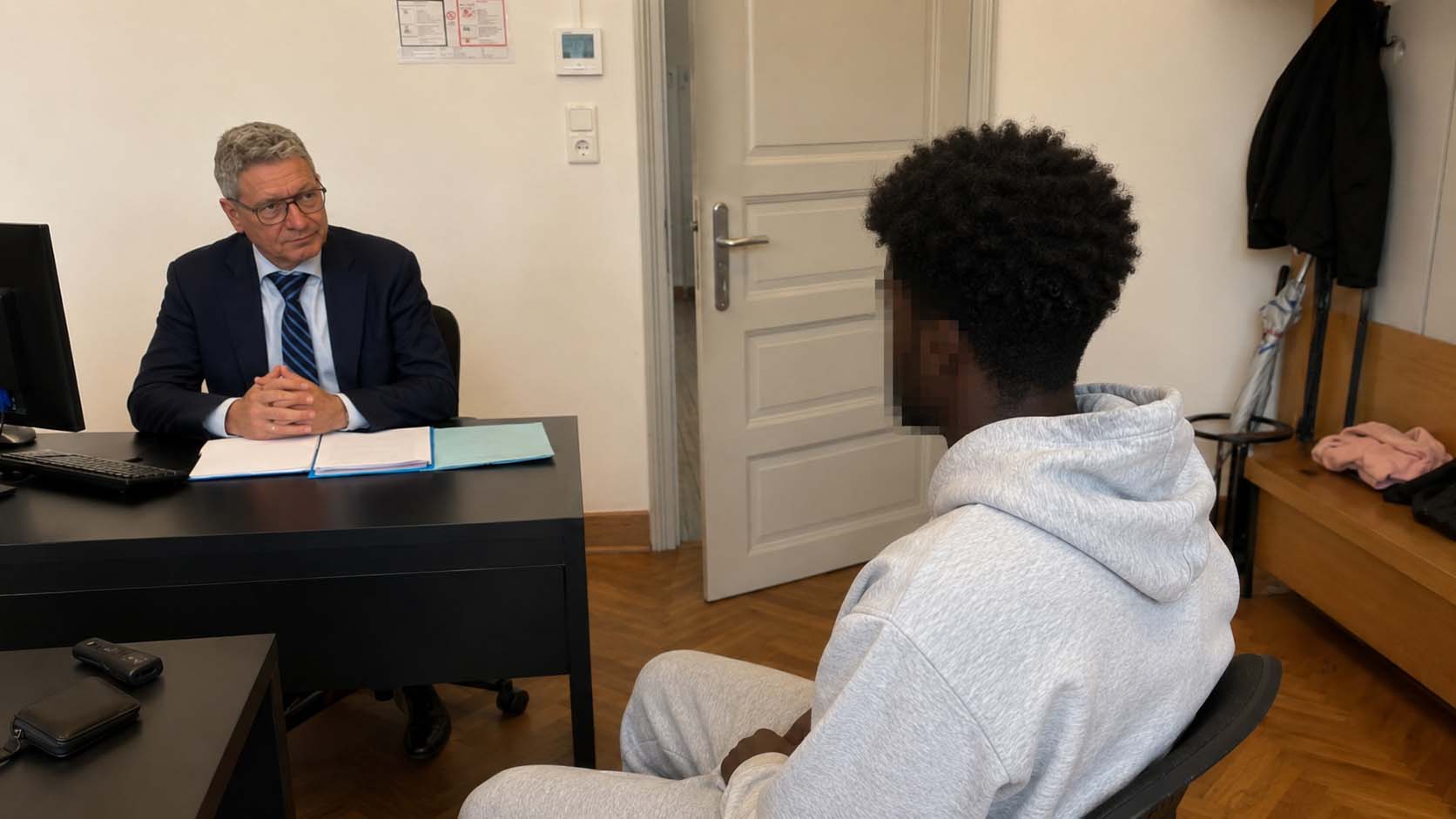
'Bro': The Feldkirch Regional Court as a theater stage.
It started as a straightforward robbery case: two Somali men were accused of luring a man from a betting shop in Dornbirn into a dark alleyway in late January, on the pretext of changing money, then taking a 100-euro note from him by force. Security footage confirmed the three men left the venue together that night, but the actual alleged assault happened off camera — and from there, the case fell apart piece by piece. The defendants offered a starkly different account, claiming the encounter was nothing more than a small cannabis deal worth 20 euros, with the alleged victim owing money. Then the alleged victim himself took the stand and promptly contradicted his own police statement, suddenly insisting the second defendant was actually a friend who had stepped in to mediate. Judge Elias Klingseis confronted him directly with the contradictions, making clear he wasn't buying the story — only for the witness to shrug it off with 'All good, bro.' The judge, visibly annoyed, cut him off: 'I am not your brother.' Even the prosecutor conceded the witness had 'certainly not told the whole truth,' though she noted that was hardly unusual in drug-related matters. With the robbery charge unsustainable, both defendants were acquitted. However, the first defendant — who had prior convictions — was separately found guilty of unlawful possession of narcotics, fined 600 euros, and had the probation period of an earlier suspended sentence extended to five years. Both verdicts are final.
Datos clave
- Two Somali men were charged with robberly theft allegedly committed in late January in Dornbirn, Austria.
- The alleged victim's account changed significantly between his police statement and his court testimony.
- The defendants claimed the encounter was a 20-euro cannabis deal, not a robbery.
- Security footage showed the three men leaving the betting shop together but did not capture the alleged offence.
- The witness addressed Judge Klingseis as 'Bro,' prompting a sharp rebuke from the bench.
- The prosecutor acknowledged the witness had likely not told the full truth.
- Both defendants were acquitted of the robbery charge.
- The first defendant was convicted of unlawful drug possession and fined 600 euros.
- The first defendant's probation period from a prior suspended sentence was extended to five years.
- All verdicts are legally final.
The Man Who Called the Judge 'Bro'
There are court proceedings in which the verdict seems to vanish long before the judge's ruling. Not because the law has failed, but because the truth has changed its clothes along the way and finally appears in a form that no one recognizes anymore.
In Feldkirch, two men stood before the court. The prosecution told of a nighttime robbery: a betting parlor, a hundred-euro note, a dark side alley, and violence. It was a story the way files love them – straightforward, orderly, with a clear beginning. Yet stories that work on paper sometimes lose their footing outside the files.
The surveillance cameras proved to be conscientious witnesses. They saw three men leaving a bar together. Nothing more. Cameras observe movements, not intentions. They know paths, but not motives. Precisely where criminal law begins, their language often ends.
The defendants told a different story. No robbery, they said. Just a failed deal over some cannabis worth barely twenty euros. A small dispute among men who met one night and wanted nothing to do with each other by morning.
The most important witness seemed to know every version – except his own. What had been true yesterday suddenly looked different today. A burdened witness became almost a friend. A co-defendant became a mediator. The sentences changed direction with an ease that left the judge bewildered.
Finally, the presiding judge laid down reason's last card on the table.
'This story, I don't buy it.'
The witness smiled as if he were not in a courtroom but on a street corner.
'All good, Bro.'
It was just a single word. Short enough to be overlooked, yet long enough to make visible the distance between court and street. The judge replied coldly:
'I am not your brother.'
Perhaps there was more in that sentence about our time than in the many pages of investigative files. The court demands distance, language, and accountability. Everyday life increasingly answers with familiarity, slang, and indifference.
In the end, not enough remained of the grand accusation of armed theft. Doubt in criminal law is not a weakness but a protection. Where facts can no longer be distinguished from narratives, no conviction may stand. Both defendants were therefore acquitted.
Only one secondary matter remained. One of the men was convicted of illegal drug possession and sentenced to a fine. The grand proceeding shrank into a small offense – like a thunderstorm that in the end leaves only a few raindrops behind.
Those who left the courtroom probably didn't take the legal niceties home with them. What remained in memory was that brief exchange between a judge who insisted on dignity and a witness who wanted to bridge formality with a casual 'Bro.' Sometimes a single word tells more about an era than an entire trial.
Análisis en profundidad
Dos ciudadanos somalíes fueron juzgados en el Tribunal Regional de Feldkirch, Austria, por los cargos de robo agravado (räuberischer Diebstahl). Se les acusó de atraer a un hombre fuera de una casa de apuestas en Dornbirn hacia un callejón oscuro bajo el pretexto de cambiar dinero, para luego quitarle un billete de 100 euros por la fuerza a finales de enero. Ambos acusados negaron completamente el robo, alegando en su lugar que el encuentro involucró solo una pequeña transacción de cannabis por 20 euros y que la supuesta víctima aún les debía dinero. El caso se basó casi enteramente en el testimonio de la supuesta víctima, ya que el único video disponible confirmó únicamente que los tres hombres salieron juntos de la casa de apuestas, sin captar el presunto asalto. El testigo clave socavó gravemente su propia credibilidad al contradecir sus declaraciones anteriores a la policía en el juicio, en particular al afirmar de repente ser amigo del segundo acusado y declarar que este acusado había actuado como mediador, afirmación que contradecía directamente su declaración previa a la policía en la que había identificado al segundo acusado como perpetrador principal. El juez Elias Klingseis expresamente declaró no creer la versión revisada del testigo. El juicio también incluyó un memorable intercambio en la sala: cuando el juez le dijo al testigo «No me creo esa historia», el testigo respondió «Todo bien, Hermano», provocando que el juez respondiera bruscamente, «¡Yo no soy tu hermano!». Aplicando el principio de in dubio pro reo (en caso de duda, a favor del acusado), el tribunal absolvió a ambos acusados del cargo de robo, no porque estuviera convencido de su inocencia, sino porque la evidencia no cumplió con el estándar de prueba requerido. La evidencia objetiva fue insuficiente y el único testigo incriminatorio resultó no ser creíble. Sin embargo, el primer acusado, quien tenía antecedentes penales relevantes, enfrentó un cargo ampliado: fue condenado por posesión ilícita de estupefacientes, multado con 600 euros, y se le extendió un período de libertad condicional previamente impuesto a cinco años. Todos los veredictos son legalmente definitivos.
Cronología
La secuencia de los hechos de este caso, desde lo ocurrido hasta la decisión final del tribunal, en el orden en que el propio tribunal los expuso.
Finales de enero (fecha exacta no especificada)
Hechos
Presunto robo: se alega que la víctima fue atraída fuera de una casa de apuestas en Dornbirn hacia un callejón oscuro bajo el pretexto de cambiar dinero, y que un billete de 100 euros le fue arrebatado por la fuerza.
Fecha desconocida
Investigación
Investigación policial realizada. La supuesta víctima prestó declaración a la policía, implicando principalmente al segundo acusado como perpetrador principal. Se revisó video de la zona, confirmando únicamente que los tres hombres salieron juntos de la casa de apuestas.
Fecha desconocida
Acusación
Ambos acusados fueron imputados por robo agravado (räuberischer Diebstahl). El cargo contra el Acusado 1 fue posteriormente ampliado para incluir posesión ilícita de estupefacientes.
Fecha desconocida
Juicio
Juicio celebrado ante el Tribunal Regional de Feldkirch ante el Juez Elias Klingseis. Ambos acusados negaron completamente el robo, alegando que la interacción fue un trato de cannabis por 20 euros y que la víctima aún les debía dinero. El testigo clave contradijo su declaración policial, afirmando ser amigo del Acusado 2 e indicando que el Acusado 2 había actuado como mediador. El juez declaró no creer la versión revisada del testigo. El memorable intercambio del «Hermano» ocurrió entre el juez y el testigo.
Fecha desconocida
Veredicto
Ambos acusados fueron absueltos del robo agravado debido a pruebas insuficientes y la falta de confiabilidad del testigo clave. El Acusado 1 fue condenado por posesión ilícita de estupefacientes, multado con 600 euros, y su período de libertad condicional fue extendido a cinco años. Todos los veredictos son legalmente definitivos.
Solidez de las pruebas
El peso que tuvo cada prueba en el razonamiento del tribunal — una barra más larga y oscura indica que el tribunal se basó más en ella para su decisión. Esto refleja el razonamiento del tribunal, no una valoración independiente del caso.
Testimonio contradictorio de la supuesta víctima
15/100Video de vigilancia (muestra solo la salida conjunta de la casa de apuestas)
30/100Negación consistente de los acusados y relato alternativo (trato de cannabis)
40/100Ausencia de pruebas físicas o forenses de violencia
10/100Antecedentes penales del Acusado 1 (relevante solo para el cargo de estupefacientes)
5/100Personas implicadas
Las personas mencionadas en la sentencia y el papel que desempeñó cada una — por ejemplo el acusado, un testigo o un perito.
Acusado 1 (Primer Acusado)
Demandado · Ciudadano somalí acusado de robo agravado junto con el Acusado 2.
Acusado 2 (Segundo Acusado)
Demandado · Ciudadano somalí acusado de robo agravado junto con el Acusado 1.
Supuesta Víctima (Testigo Clave)
Demandante / Testigo principal de la acusación · El hombre presuntamente robado en el callejón; el único testigo directo del presunto asalto.
Juez Elias Klingseis
Juez Presidente · Juez en el Tribunal Regional de Feldkirch; presidió el juicio y dictó el veredicto.
Por qué el tribunal decidió así
Los motivos expuestos por el propio tribunal para su fallo, en el orden en que aparecen — no es una jerarquía de importancia jurídica, solo el orden de presentación.
- El único testigo de la acusación (la supuesta víctima) contradijo sus propias declaraciones anteriores múltiples veces, haciendo que su testimonio fuera sustancialmente increíble ante el tribunal
- No existía prueba objetiva de un robo violento: el video solo confirmó que los tres hombres salieron juntos de la casa de apuestas, no cualquier asalto o robo
- El estándar de duda razonable («in dubio pro reo») no pudo satisfacerse dada la testimonianza contradictoria y poco confiable y la ausencia de pruebas corroborantes
- Ambos acusados consistentemente negaron el robo y ofrecieron una explicación alternativa (una transacción de cannabis de 20 euros con una deuda pendiente), que no pudo ser concluyentemente desmentida
- La revisión en la sala del testigo —afirmando amistad con el segundo acusado e indicando que el segundo acusado incluso había mediado— contradijo directamente su declaración policial, socavando aún más el caso de la acusación
Preguntas frecuentes
¿Cuáles fueron los cargos principales en este caso?
Los dos acusados fueron acusados de räuberischer Diebstahl (robo agravado). El primer acusado enfrentó adicionalmente un cargo de unerlaubter Besitz von Suchtgift (posesión ilícita de estupefacientes).
¿Cuál fue el resultado del cargo de robo para ambos acusados?
Ambos acusados fueron absueltos del cargo de robo agravado. El tribunal encontró que la evidencia no cumplía con el estándar de prueba requerido.
¿Qué principio legal aplicó el tribunal para llegar a la absolución?
El tribunal aplicó el principio de in dubio pro reo, lo que significa «en caso de duda, a favor del acusado». La absolución no se basó en un hallazgo de inocencia sino en la insuficiencia de las pruebas.
¿Creyó el tribunal que los acusados eran inocentes del robo?
No necesariamente. El tribunal expresamente no condenó porque el estándar de prueba no fue cumplido, no porque estuviera afirmativamente convencido de la inocencia de los acusados.
¿Qué dijeron los acusados que sucedió durante el encuentro?
Los acusados negaron completamente el robo. Afirmaron que el encuentro involucró solo una pequeña transacción de cannabis por 20 euros e indicaron que la supuesta víctima aún les debía dinero.
¿Qué afirmó la supuesta víctima que sucedió?
La supuesta víctima afirmó que fue atraída fuera de una casa de apuestas en Dornbirn hacia un callejón oscuro bajo el pretexto de un cambio de dinero, y que los acusados luego le quitaron un billete de 100 euros por la fuerza.
¿Por qué el testigo clave fue encontrado no creíble?
El testigo contradijo severamente su declaración anterior a la policía en el juicio. Más notablemente, de repente afirmó ser amigo del segundo acusado y dijo que ese acusado había actuado como mediador, contradiciendo directamente su declaración previa a la policía en la cual había identificado a ese mismo acusado como perpetrador principal.
¿Qué dijo el juez sobre la versión revisada del testigo?
El Juez Elias Klingseis expresamente declaró que no creía la versión revisada del testigo.
¿Existía alguna prueba de video en este caso?
Sí, pero fue limitada. El video disponible confirmó únicamente que los tres hombres salieron juntos de la casa de apuestas. El presunto asalto mismo no fue capturado en ninguna grabación.
¿Cuál fue el memorable intercambio en la sala de audiencias entre el juez y el testigo?
Cuando el juez le dijo al testigo «No me creo esa historia», el testigo respondió «Todo bien, Hermano». El juez entonces respondió bruscamente, «¡Yo no soy tu hermano!»
¿Qué sucedió con el primer acusado más allá del cargo de robo?
El primer acusado fue condenado por posesión ilícita de estupefacientes, multado con 600 euros, y tuvo su período de libertad condicional previamente impuesto extendido a cinco años.
¿Fue el segundo acusado condenado por algo?
No es evidente en la sentencia más allá de la absolución del cargo de robo. Ninguna condena adicional se menciona para el segundo acusado.
¿Por qué el primer acusado enfrentó un cargo ampliado comparado con el segundo acusado?
El primer acusado tenía antecedentes penales relevantes, lo que respaldó el cargo adicional de posesión de estupefacientes y la extensión de su período de libertad condicional.
¿Dónde tuvo lugar el presunto robo?
El presunto robo tuvo lugar en Dornbirn, Austria, en un callejón oscuro cerca de una casa de apuestas, a finales de enero.
¿Qué tribunal escuchó este caso?
El caso fue escuchado en el Tribunal Regional de Feldkirch, Austria.
¿Quién fue el juez presidente?
El juez presidente fue Elias Klingseis.
¿Están los veredictos sujetos a apelación?
La sentencia establece que todos los veredictos son legalmente definitivos.
¿Cuál fue el supuesto valor del artículo tomado en el robo?
La supuesta víctima afirmó que un billete de 100 euros le fue arrebatado por la fuerza.
¿Cuál fue el supuesto valor de la transacción de cannabis según los acusados?
Los acusados afirmaron que la transacción involucró cannabis por un valor de 20 euros.
¿Cuántos testigos estaban disponibles para respaldar el cargo de robo?
El caso se basó casi enteramente en el testimonio de la supuesta víctima, que fue el único testigo incriminatorio. No se mencionan otros testigos corroborando el robo en la sentencia.
Por qué importa
The case illustrates how a robbery prosecution can collapse entirely when the key witness contradicts his own prior statements, leaving the court unable to establish the facts beyond reasonable doubt. It also highlights how drug-related encounters can generate conflicting narratives that frustrate truth-finding, and how courts may still pursue ancillary charges — here, drug possession — when the primary charge fails.
Fuentes
Austrian Reconviction Rate
Context: The Price of Doubt
A court is not a theater. And yet there are days when the stage is better cast than the play.
One might shake one's head at the effort. Police, prosecutors, judges, defense attorneys, interpreters, court clerks – an entire state apparatus set itself in motion over alleged damages of one hundred euros, or perhaps just over a failed cannabis deal worth twenty euros. Ask the taxpayer, and they will see waste. Ask the rule of law, and you get a different answer: it is not the amount of money that determines whether criminal proceedings are conducted, but the suspicion of a serious crime.
And serious the accusation certainly was. Armed theft is among those offenses where property and violence intersect. Had the court been convinced by the prosecution, the defendants would have faced not a minor offense, but a painful prison sentence. What began as a nighttime walk from a betting parlor into a side alley could easily have become the start of a long imprisonment.
But between suspicion and conviction lies the burden of proof. For a guilty verdict, the court would have had to be convinced that the accusation actually occurred as the prosecution described it. It would have needed credible, internally consistent testimony or objective evidence that mutually supported each other. That is precisely where the case failed. The main witness contradicted himself, the video recordings ended where the decisive minutes began, and the defendants' alternative explanation could neither be reliably refuted nor confirmed. Criminal law knows only one answer to such situations: in case of doubt, no conviction may stand.
Some may find this outcome unsatisfying. Yet an acquittal does not necessarily mean that nothing happened. It merely means that what happened could not be proven with the required certainty. This distinction is uncomfortable – but it protects every citizen from convictions based on mere suspicion.
The question remains whether the defendants learned anything from this proceeding. No court has an answer to that. At least one of them was convicted of illegal drug possession and already had a prior conviction for the same offense. This shows that this was not his first conflict with the law. Whether he will distance himself from criminal activity in the future or appear in court again, no one can seriously predict. Recidivism statistics describe probabilities, but never the fate of a single person.
Perhaps the real lesson of this trial is something else. Not the casual shout of 'Bro,' which drew attention for a brief moment, remains significant. What matters is that a state under the rule of law is prepared to treat even a small, tangled, and unpleasant-seeming case with the same care as a major one. For the weight of justice is not measured by the value of the banknote, but by the thoroughness with which it seeks the truth.